
Multi-tenant architecture determines how efficiently you serve hundreds of customers while maintaining data security and predictable performance. For content platforms like PublishPuffin, these architectural choices enable serving diverse businesses—from home services to healthcare—through a single unified system. For SaaS businesses, the choice between shared infrastructure and isolated resources determines how efficiently you serve hundreds or thousands of customers while maintaining security boundaries and predictable performance. AWS Step Functions provide the orchestration layer that makes complex, tenant-aware workflows manageable at scale.
For content platforms like PublishPuffin, multi-tenant architecture enables us to serve diverse clients—from home services companies to healthcare practices—through a single codebase and infrastructure stack while maintaining complete data isolation and customized workflows for each tenant. This architectural approach reduces operational overhead while preserving each business’s unique brand voice and publishing requirements—exactly what content platforms require to scale efficiently.
Why Multi-Tenant SaaS Architecture on AWS Matters
Multi-tenant architecture consolidates multiple customers onto shared infrastructure, reducing per-tenant costs while maintaining logical separation. The economics are compelling: shared compute, storage, and networking resources eliminate the duplication inherent in single-tenant deployments. AWS provides native primitives for building these systems—IAM roles, resource tagging, account isolation strategies, and service-level tenant context—that make building multi-tenant SaaS architecture more accessible than managing separate infrastructure per customer.
The cost benefits extend beyond infrastructure. Development teams maintain one codebase instead of customer-specific forks. Operations teams monitor unified dashboards rather than scattered environments. Security teams audit a single control plane. These operational efficiencies compound as the tenant base grows, creating economies of scale that single-tenant architectures cannot match.
Modern SaaS platforms must balance three competing demands: data isolation to prevent cross-tenant data leakage, performance isolation to prevent noisy neighbors from degrading service quality, and customization to meet tenant-specific requirements. PublishPuffin uses Lambda, DynamoDB, and Step Functions to isolate tenant workflows. When one business publishes content, another’s workflow continues unaffected—even when both execute simultaneously. This isolation ensures predictable performance regardless of tenant volume.
Key Insight: Multi-tenant architecture isn’t just about cost savings—it’s about operational leverage. The ability to deploy features, security patches, and infrastructure improvements once for all tenants creates a compounding advantage over time.
| AWS Service | Multi-Tenant Capability | Custom Engineering Alternative | PublishPuffin Implementation |
|---|---|---|---|
| AWS SaaS Factory | Reference architectures for common patterns | Build isolation patterns from scratch | Foundation for tenant context propagation |
| Step Functions | Orchestrate tenant-aware workflows without custom queueing | Build custom coordination logic and state management | Content pipeline orchestration per tenant |
| CloudWatch | Per-tenant metrics through dimension filtering | Build custom monitoring and aggregation systems | Real-time tenant performance visibility |
Building Scalable Multi-Tenant SaaS Architecture with AWS
The foundation of any scalable SaaS platform design is choosing the right isolation model. AWS supports three primary approaches: account-level isolation where each tenant receives a dedicated AWS account within an organization, VPC-level isolation where tenants share an account but operate in separate network environments, and application-level isolation where tenant context determines access within shared resources.
Account-level isolation provides the strongest boundaries—billing, resource limits, and security policies are naturally segregated. This approach suits scenarios where regulatory compliance requires physical separation or where tenants have dramatically different scaling profiles. The tradeoff is operational complexity: managing hundreds of accounts requires automation through AWS Control Tower or custom orchestration.
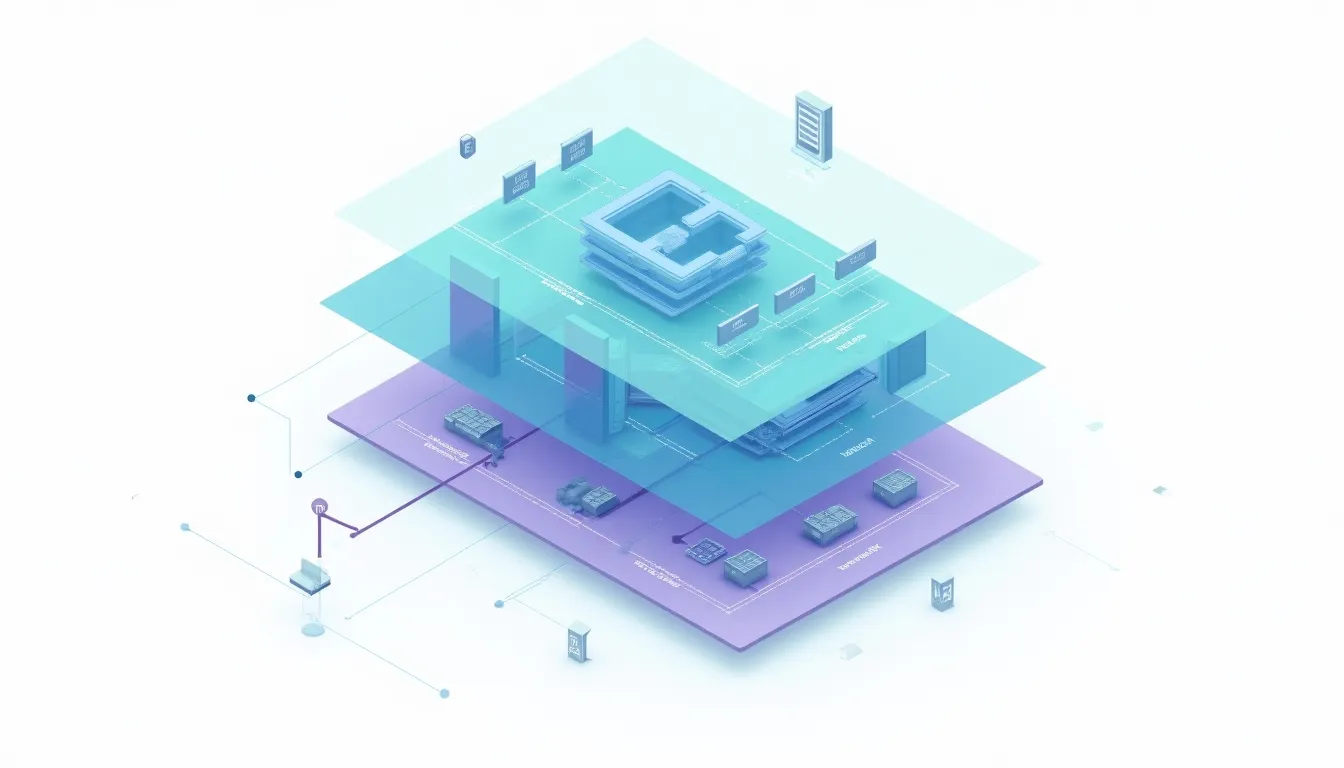
For most SaaS platforms, application-level isolation offers the best balance of cost efficiency and security. This model uses a single set of infrastructure resources with tenant context passed through the request lifecycle. Every API call, Lambda invocation, and database query includes tenant identification, enabling fine-grained access control through IAM policies and application logic.
| Isolation Model | Data Security | Cost Efficiency | Operational Complexity | Best For |
|---|---|---|---|---|
| Account-Level | Highest | Lowest | High | Regulated industries, enterprise tiers |
| VPC-Level | High | Moderate | Moderate | Mid-market customers with custom networking |
| Application-Level | High with proper implementation | Highest | Low-to-Moderate | High-volume SaaS with standard requirements |
Implementing role-based access control (RBAC) at the application layer requires passing tenant context through every service boundary. Lambda functions receive tenant ID in event payloads. DynamoDB queries include tenant ID as a partition key or filter condition. S3 bucket policies use tenant-specific prefixes. This pattern, sometimes called “tenant context propagation,” ensures that access decisions consider both user identity and tenant membership at every authorization point.
API Gateway serves as the entry point for tenant-aware request routing. Custom authorizers validate tenant credentials and inject tenant context into request headers or JWT claims. Lambda functions read this context and apply it to downstream service calls. This architecture enables a single API to serve all tenants while maintaining strict isolation boundaries. See how PublishPuffin implements tenant context propagation in our How It Works guide.
AWS Step Functions for Multi-Tenant Content Platform Workflows
Step Functions excel at orchestrating complex, stateful workflows. For content platforms, this means coordinating generation, validation, transformation, and publishing while maintaining tenant context throughout. Each execution carries tenant identification in its input payload.
Each Step Functions state machine execution carries tenant context in its input payload. State transitions pass this context forward, enabling downstream tasks to make tenant-aware decisions. For example, a content validation step might retrieve tenant-specific quality thresholds from DynamoDB using the tenant ID, then apply those thresholds to approve or reject the content.

Parallel execution capability makes Step Functions particularly valuable for multi-tenant scenarios. A single state machine definition can process content for hundreds of tenants simultaneously, with each execution maintaining independent state. Error handling applies per-execution: if one tenant’s workflow encounters a validation failure, other tenant executions continue unaffected. Retry logic prevents transient failures in shared services from cascading across tenant boundaries.
The SaaS content management system AWS pattern we use at PublishPuffin demonstrates this architecture in production. When our scheduler detects that multiple tenants need new content, it triggers independent Step Functions executions—one per tenant per post. Each execution flows through the same state machine definition but operates on tenant-specific data, applies tenant-specific validation rules, and publishes to tenant-specific WordPress installations.
Step Functions integrates with AWS X-Ray for distributed tracing, making it possible to visualize how tenant requests flow through the system. CloudWatch Logs captures execution history for debugging tenant-specific issues. CloudWatch Metrics track execution duration, error rates, and throttling at the state machine level, with tenant ID available as a custom dimension for per-tenant analysis.
Tenant Isolation and Data Security in Step Functions
Security in multi-tenant Step Functions begins with IAM policies. Each Lambda function invoked by Step Functions assumes a role with permissions scoped to the minimum required resources. For tenant-specific operations, IAM conditions can restrict access based on resource tags or path prefixes that encode tenant identity.
Tenant context tokens flow through execution payloads but should be validated at each service boundary. Lambda functions verify that the tenant ID in the incoming event matches the tenant ID in the data being processed. This prevents confused deputy attacks where a malicious payload attempts to access another tenant’s resources by manipulating identifiers.
Encryption at rest and in transit protects tenant data throughout the workflow lifecycle. Step Functions execution history can contain sensitive information, so enabling encryption at rest through AWS KMS ensures that execution logs remain confidential. For particularly sensitive tenants, dedicated KMS keys per tenant provide cryptographic isolation—even administrators with Step Functions access cannot decrypt execution history without tenant-specific key permissions.
AWS CloudTrail logs all Step Functions API calls, providing an audit trail for compliance and security investigations. CloudWatch alarms can monitor for unusual patterns—such as a spike in failed executions for a specific tenant or attempts to access cross-tenant resources. The AWS Step Functions security documentation provides detailed guidance on implementing these controls.
Cost Optimization for Multi-Tenant SaaS Platforms
Step Functions pricing depends on state transitions, so optimizing state machine design directly impacts operating costs. Batching tenant operations reduces transition count: instead of invoking a Lambda function once per item, accumulate items and process them in a single invocation. Use map states to parallelize operations efficiently without creating excessive parallel branches.
Lambda reserved concurrency prevents a single tenant from consuming all available Lambda capacity. Setting per-function reserved concurrency limits ensures that high-volume tenants cannot starve smaller tenants of compute resources. This configuration creates predictable performance isolation at the cost of slightly reduced overall efficiency—reserved capacity that sits idle cannot be borrowed by other functions.
DynamoDB on-demand pricing simplifies capacity planning for variable workloads, but provisioned capacity with auto-scaling offers better economics at scale. Monitor per-tenant read and write patterns through custom CloudWatch metrics, then allocate provisioned capacity to match aggregate demand. For content platforms with predictable publishing schedules, this approach reduces costs while maintaining performance guarantees.
Cost allocation tags enable per-tenant cost tracking. Tag Step Functions executions, Lambda invocations, and DynamoDB tables with tenant identifiers, then use AWS Cost Explorer to break down expenses by tenant. This visibility supports usage-based pricing models and identifies tenants with anomalous cost patterns that may indicate bugs or abuse. Our pricing model reflects the operational efficiency multi-tenant architecture enables.
Real-World Implementation: Content Management System Example
A production multi-tenant application AWS Step Functions implementation demonstrates how these patterns work together. Consider a content management system where each tenant maintains independent publishing workflows, editorial calendars, and brand voice configurations. The system must coordinate content generation, human review (for some tenants), compliance checking, and scheduled publication—all while maintaining complete isolation between tenants.
The Step Functions state machine begins with a tenant context injection step that retrieves tenant configuration from DynamoDB. Subsequent states use this configuration to determine workflow behavior: does this tenant require human approval? What compliance rules apply? What voice profile should generation use? Each decision point remains tenant-aware without requiring tenant-specific state machine definitions.
Each Lambda function handles tenant-aware business logic: validation applies tenant-specific quality thresholds to generated content, formatting enforces brand guidelines (colors, typography, image treatments), and publishing authenticates to the tenant’s WordPress installation using credentials from AWS Secrets Manager. This design ensures one tenant’s validation rules never interfere with another’s publishing requirements.
CloudWatch dashboards provide per-tenant operational visibility. Metrics show content generation success rates, validation failure reasons, and publishing latency—all filterable by tenant ID. When a tenant reports a publishing issue, operations teams can immediately see that tenant’s recent execution history, error logs, and performance metrics without sifting through cross-tenant data. This operational design is detailed in our content management strategy guide.
Best Practices for Deploying Multi-Tenant SaaS on AWS
Infrastructure as Code eliminates configuration drift between tenants. CloudFormation templates parameterize tenant identifiers, which means new customers can be provisioned in minutes rather than days. PublishPuffin uses this approach to onboard home services companies, healthcare practices, and local retailers without manual configuration.
Blue-green deployments protect customer workflows during Step Functions updates. New versions run in parallel while a percentage of executions validate the changes. Once confirmed, all new executions use the updated version while in-flight executions complete on the old version. This means customer content publishes reliably even during deployment cycles.
Multi-tenant platforms require visibility single-tenant systems don’t. Build dashboards that show both aggregate health—total execution count, error rate, P95 latency—and per-tenant breakdowns. When one tenant’s error rate spikes, you immediately identify whether changes to that tenant’s configuration caused the issue.
- Test tenant isolation rigorously: Automated tests should verify that tenant A cannot access tenant B’s data under any circumstances. Include negative test cases that attempt cross-tenant access using manipulated tokens, expired credentials, and malformed requests.
- Implement circuit breakers: Prevent cascading failures by detecting when a specific tenant’s requests consistently fail and temporarily isolating that tenant’s traffic while maintaining service for other tenants.
- Plan for tenant migration: Design data schemas and storage patterns that support moving tenants between tiers or regions without service disruption. Include tenant ID in all data keys to enable efficient tenant-scoped queries and exports.
- Document runbooks for common scenarios: Create operational procedures for tenant onboarding, tenant offboarding, tenant data export, and tenant-specific incident response. Practice these procedures regularly to validate they work at scale.
Large enterprises often require dedicated AWS accounts for regulatory compliance or security reasons. Landing zones automate the setup of these isolated environments with baseline controls, enabling platforms to serve enterprise customers without manual configuration overhead. The AWS Landing Zone solution accelerates this setup.
Multi-tenant SaaS platforms represent a significant architectural investment that pays dividends through operational leverage and cost efficiency. Platform developers who choose multi-tenant architecture on AWS can significantly reduce operational costs compared to single-tenant approaches. AWS provides the building blocks—Step Functions for orchestration, Lambda for compute, DynamoDB for data, IAM for security—that make sophisticated multi-tenant systems achievable without custom infrastructure. This architecture powers how PublishPuffin serves dental practices, property managers, and e-commerce brands from a single codebase. Each business maintains isolated data, custom publishing schedules, and brand-specific voice validation—without the complexity or cost of separate infrastructure.
PublishPuffin delivers content generation to hundreds of businesses simultaneously using multi-tenant infrastructure. We handle the orchestration complexity—you configure your voice profile, connect your WordPress site, and focus on strategy while the platform generates consistent content week after week. If you’re evaluating how autonomous content generation fits your business, explore our use cases to see how multi-tenant architecture delivers consistent value across industries.