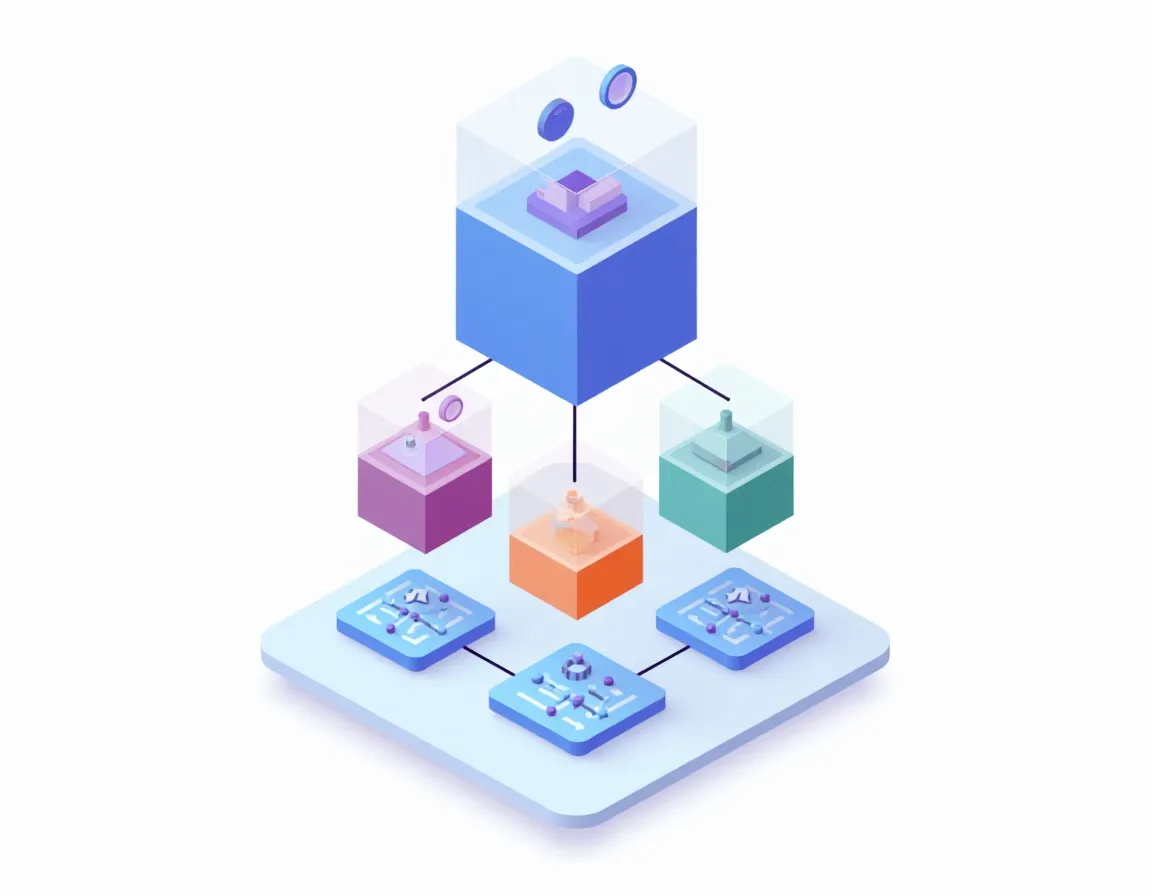
For SaaS platforms serving multiple customers, multi-tenant architecture SaaS is the technical foundation that enables efficient scaling. Instead of deploying separate application instances for each customer, the platform runs a single codebase that serves all businesses while maintaining strict data isolation and security boundaries. SaaS providers can deliver consistent experiences, push updates simultaneously, and optimize infrastructure costs across their entire customer base.
At PublishPuffin, hundreds of businesses generate blog posts through our shared content engine. Each gets completely separate brand voice profiles, content calendars, and performance analytics—managed through configuration, not separate deployments. We deliver sophisticated AI-powered content generation to companies across industries without the operational overhead of single-tenant systems. The architecture decisions behind multi-tenancy directly impact platform reliability, feature velocity, and long-term operational costs.
What Is Multi-Tenant Architecture in SaaS?
Multi-tenant architecture is a software design pattern where a single application instance serves multiple customers (tenants) from shared infrastructure. Each tenant’s data, configurations, and user sessions remain logically isolated despite running on the same physical servers and application code. This differs fundamentally from single-tenant models, where each customer receives a dedicated application instance with separate databases and compute resources.
How We Keep Your Data Separate from Other Customers
Separating your brand voice, content calendar, and performance data from other businesses requires three technical layers: tenant identification (so the system knows whose data to access), data isolation (database filters prevent accidental cross-customer exposure), and resource controls (one customer’s traffic spike doesn’t slow down another’s publishing).
- Tenant identification layer: Every API request includes tenant context through authentication tokens or subdomain routing, telling the application which customer’s data to access
- Data isolation mechanisms: Database schemas use tenant ID columns to partition data, with query filters automatically applied at the ORM level to prevent cross-tenant data leakage
- Resource allocation controls: Rate limiting, compute quotas, and database connection pooling prevent any single tenant from monopolizing shared resources
For content platforms specifically, multi-tenant content platform design must also handle tenant-specific configurations like brand voice profiles, approval workflows, and publishing schedules without requiring separate application deployments.
Multi-Tenant vs Single-Tenant SaaS: Key Differences
| Aspect | Multi-Tenant | Single-Tenant |
|---|---|---|
| Infrastructure | Shared servers, databases, and application code | Dedicated resources per customer |
| Updates and Maintenance | Deploy once, affects all tenants simultaneously | Per-customer update cycles required |
| Customization Depth | Configuration-based within platform constraints | Deep customization including code modifications |
| Cost Efficiency | High resource utilization across customers | Higher per-customer infrastructure costs |
| Isolation Level | Logical separation through software controls | Physical separation at infrastructure layer |
The practical implication: you get new features the moment we release them, without waiting for your own deployment team to integrate updates. Your brand voice, publishing rules, and content strategies remain completely separate from every other business on the platform.
Understanding this distinction matters when evaluating SaaS platforms. Multi-tenant systems trade some customization flexibility for operational efficiency and faster feature delivery, while single-tenant models offer deeper isolation at higher operational complexity.
Key Benefits of Multi-Tenant Architecture
The multi-tenant architecture benefits extend across technical operations, product development velocity, and business economics. Organizations that successfully implement multi-tenancy gain several compounding advantages.
Cost Efficiency Through Shared Infrastructure
Running a single application instance for all customers reduces infrastructure overhead substantially. Server utilization rates improve because resources pool across tenants with different usage patterns—some customers generate content during business hours while others run batch processes overnight. Database storage consolidates duplicate schema structures, and CDN costs distribute across all tenants using the same asset delivery network.
These efficiencies translate to more competitive pricing models for customers without sacrificing platform quality or performance.
Simplified Maintenance and Automatic Updates
Single-tenant architectures require deploying updates to dozens or hundreds of separate environments, each needing testing, rollback plans, and customer-specific scheduling. Multi-tenant platforms deploy once. Every tenant receives new features, security patches, and performance improvements simultaneously without coordination overhead.
This operational simplicity means engineering teams spend less time on deployment logistics and more time building features. Bug fixes ship faster, security vulnerabilities close across the entire customer base immediately, and technical debt decreases because there’s only one codebase to maintain.
Improved Scalability Without Separate Deployments
Adding new customers to a multi-tenant platform requires provisioning tenant records and configurations rather than spinning up entire infrastructure stacks. Onboarding happens in minutes instead of days. As customer count grows, horizontal scaling adds compute and database capacity that serves all tenants rather than siloed resources per customer.
Multi-tenant platforms scale in two dimensions simultaneously—more customers on existing infrastructure, and additional capacity that benefits all users.
Faster Feature Rollouts and Consistent Experience
Product teams can iterate rapidly when changes deploy to all customers at once. A/B testing produces statistically significant results faster with larger user pools. Feature flags control rollout velocity without managing per-tenant deployment schedules. Customer feedback cycles accelerate because every user experiences the same product version.
Multi-Tenant Architecture Scalability Explained
Scaling multi-tenant systems requires different strategies than scaling single-tenant applications. The challenge shifts from replicating infrastructure to managing shared resource contention and maintaining performance isolation across diverse tenant workloads.
Handling Growing User Bases and Data Volumes
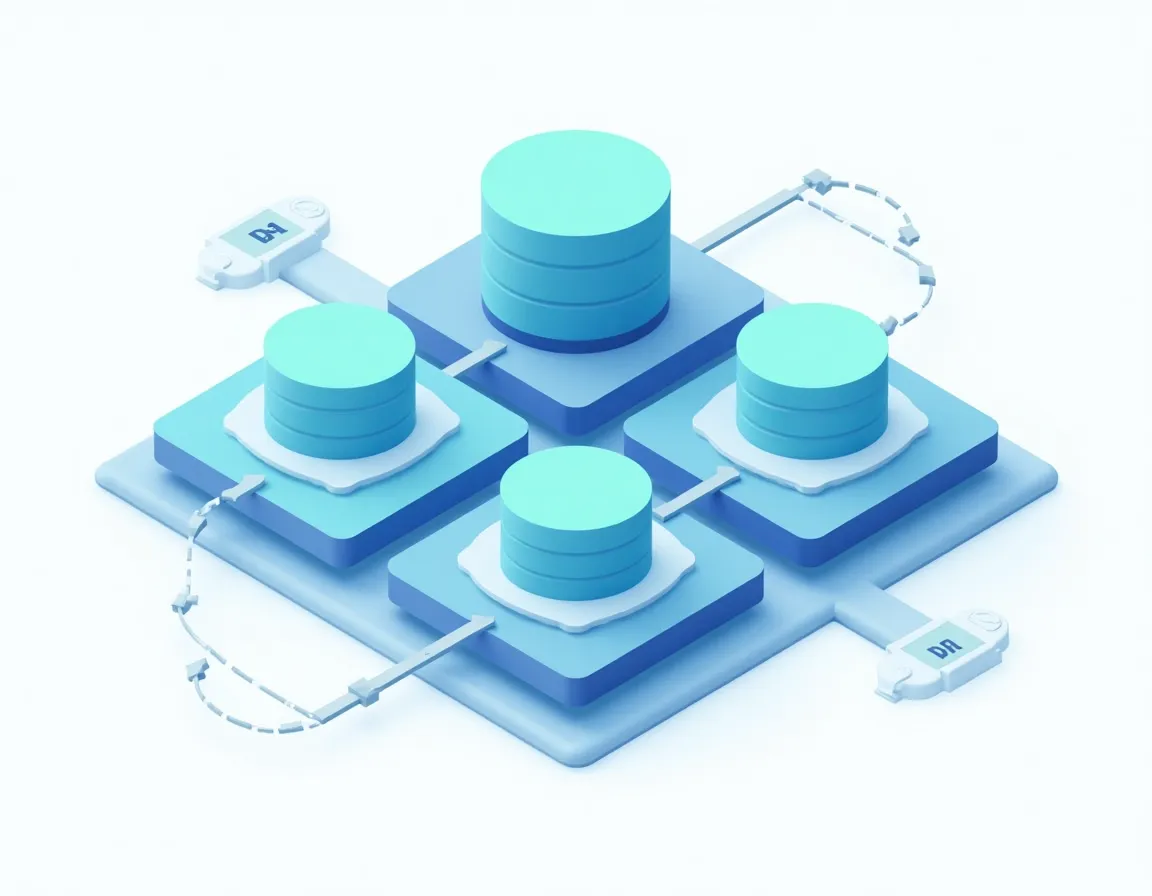
As tenant count increases, the database becomes the primary scaling bottleneck. Multi-tenant architecture scalability depends on partitioning strategies that distribute data across multiple database instances while maintaining query performance. One approach assigns each tenant (or group of tenants) to a specific database shard, routing queries based on tenant ID.
Hybrid models keep high-frequency metadata in a shared database while sharding larger content tables. Read replicas route read-heavy operations to separate databases while directing writes to primary instances.
Our content generation pipeline processes thousands of blog posts monthly across hundreds of tenants. We shard content storage by tenant ID while maintaining shared keyphrase research data that benefits all customers through aggregated search trend analysis.
Resource Allocation and Tenant Isolation at Scale
Preventing performance degradation when one tenant experiences traffic spikes requires isolation mechanisms at multiple layers. Application-level rate limiting caps API request rates per tenant. Database connection pooling reserves minimum connection counts for each tenant while allowing unused capacity to float. CPU and memory quotas prevent runaway processes from affecting other tenants’ workloads.
These controls must balance fairness with efficiency. Over-restrictive quotas waste resources during off-peak hours, while under-provisioned limits allow one customer’s large batch job to slow down another’s API calls.
Monitoring and Optimization Techniques
Multi-tenant platforms require tenant-aware observability. Metrics collection tags every request, database query, and background job with tenant identifiers. This granularity enables per-tenant performance analysis, anomaly detection, and capacity planning. When a specific tenant’s query patterns slow down, engineering teams can optimize their specific use case without affecting other customers.
Effective multi-tenant monitoring requires tracking both overall system health and per-tenant resource consumption. This granularity identifies which customers might benefit from optimization without affecting others using the same platform.
Multi-Tenant Content Platform Design Best Practices
Content platforms introduce unique multi-tenancy challenges. Each tenant needs distinct brand voices, publishing workflows, approval chains, and content calendars while running on shared generation infrastructure. SaaS multi-tenancy best practices for content systems emphasize configuration flexibility without compromising platform stability.
Architecting Customization Without Compromising Stability
The tension between tenant-specific customization and shared infrastructure requires careful API design. Rather than allowing arbitrary code execution or template modifications that could destabilize the platform, successful content platforms offer configuration-driven customization, workflow orchestration, and template composition.
- Configuration-driven customization: Tenants define brand voice parameters, tone descriptors, and vocabulary preferences through structured configuration rather than custom code
- Workflow orchestration: Approval chains, review stages, and publishing schedules use tenant-specific state machines built on shared workflow engines
- Template composition: Content structures assemble from validated, tested components rather than allowing arbitrary HTML or script injection
This approach provides meaningful customization while maintaining security boundaries and keeping the codebase maintainable.
Implementing Tenant-Specific Configurations and Branding
Brand voice profiles, as used throughout PublishPuffin, demonstrate practical multi-tenant configuration. Each tenant’s voice profile includes tone descriptors, forbidden phrases, CTA styles, and sample paragraphs that guide content generation. These profiles live in a tenant configuration database, retrieved at generation time and applied through prompt engineering rather than separate model training.
This configuration approach scales efficiently—adding new tenants requires creating configuration records, not deploying infrastructure or training custom models.
Data Security and Compliance Considerations
Multi-tenant platforms must prevent data leakage between tenants at every layer. Database queries automatically include tenant ID filters enforced at the ORM level. API endpoints validate that authenticated users can only access their tenant’s resources. Background jobs processing content for one tenant never load data belonging to others.
Compliance requirements vary by tenant based on industry and geography. Healthcare tenants may require HIPAA compliance, while European customers need GDPR data handling. Multi-tenant platforms handle this through tenant-specific compliance flags that modify data retention policies, encryption requirements, and audit logging. Our privacy policy outlines how we maintain data separation and security across all tenants.
The NIST guidelines on cloud computing security provide detailed recommendations for implementing secure multi-tenant architectures, particularly around tenant isolation, data protection, and incident response.
Challenges and Solutions in Multi-Tenancy
Despite its advantages, multi-tenant architecture introduces operational challenges that require proactive engineering solutions. Understanding these pain points helps platform teams build resilience before problems emerge in production.
The Noisy Neighbor Problem
When one tenant’s workload consumes disproportionate resources, other tenants experience performance degradation. A customer running a large batch content generation job might saturate database connections, slow down API response times, or exhaust compute capacity. This affects tenants with no relationship to the resource-heavy customer.
Solutions include implementing per-tenant rate limits, isolating batch operations to separate worker pools, and using priority queuing that processes interactive requests before background jobs. Automatic throttling detects when a single tenant’s requests consistently fail or timeout, throttling their traffic until issues resolve.
Data Isolation and Security Vulnerabilities
The most serious multi-tenant risk is cross-tenant data exposure. Query logic bugs, missing tenant ID filters, or authentication bypass vulnerabilities could leak one tenant’s data to another. Preventing these issues requires defense in depth: tenant ID columns on all tables, automatic query filtering at the database abstraction layer, integration tests that verify isolation boundaries, and security reviews of any code touching multi-tenant data.
Database-level isolation controls in databases like PostgreSQL provide additional protection by enforcing tenant isolation at the database engine level, independent of application logic.
Backup and Disaster Recovery in Shared Infrastructure
Single-tenant systems can restore individual customers from backup without affecting others. Multi-tenant architectures require more sophisticated approaches since backups contain data for all tenants. Point-in-time recovery must support restoring specific tenants’ data without rolling back other customers’ recent changes.
Strategies include data recovery with tenant-aware restore scripts, continuous replication to standby databases that can serve as recovery sources, and tenant-level backup retention policies that comply with varying regulatory requirements.
Compliance and Regulatory Requirements Across Regions
Tenants operating in different jurisdictions may have conflicting compliance requirements. European tenants need data residency in EU regions, while certain US industries require specific audit logging or encryption standards. Multi-tenant platforms handle this through data residency configurations, per-tenant encryption keys, and compliance profiles that modify system behavior based on tenant location and industry.
Choosing Multi-Tenant Architecture for Your SaaS Platform
Multi-tenant architecture isn’t the right choice for every SaaS business. The decision depends on your target market, customization requirements, and operational capabilities. Evaluating whether multi-tenancy fits requires understanding both immediate implementation costs and long-term operational returns.
Evaluating Business Model Fit
Multi-tenant architecture works best for SaaS products with standardized feature sets serving many customers with similar needs. If your platform requires deep customization, customer-specific integrations, or allows arbitrary code execution, single-tenant or hybrid models may provide better customer experience. But if you’re building a platform where customers configure rather than customize, multi-tenancy delivers substantial advantages.
Content platforms like PublishPuffin fit this profile well. While each customer needs distinct brand voices and publishing workflows, the underlying generation pipeline, SEO optimization, and quality validation steps remain consistent across all tenants. We deliver sophisticated content generation capabilities to businesses across industries through shared infrastructure.
Implementation Complexity and Long-Term Maintenance
Building multi-tenant architecture from the start requires more upfront design work than single-tenant systems. You must architect tenant isolation, design configuration systems, and implement security boundaries before onboarding the first customer. However, this investment pays dividends as customer count grows. Operational overhead scales logarithmically rather than linearly—supporting 100 customers requires marginally more effort than supporting 10.
Single-tenant architectures feel simpler initially but create operational burden that grows with every customer. Each deployment, upgrade, and bug fix multiplies across your customer base.
Return on Investment for Multi-Tenancy Adoption
The economic case for multi-tenant architecture strengthens as your customer base grows. Infrastructure costs per tenant decrease with scale. Feature development costs amortize across all customers. Support and operations teams manage one platform instead of many instances.
These benefits compound over time. A platform with 10 customers may see marginal efficiency gains from multi-tenancy. A platform with 500 customers sees transformative operational returns that single-tenant competitors cannot match.
Migration Strategies from Single-Tenant Systems
Some platforms start with single-tenant architecture and migrate to multi-tenancy as they scale. This transition requires careful planning: building tenant identification systems, consolidating databases while maintaining data isolation, and migrating customers incrementally to minimize risk. Successful migrations often use hybrid phases where new customers join the multi-tenant platform while existing customers gradually migrate from legacy single-tenant deployments.
Organizations considering this path should study distributed systems patterns that enable safe data migration and incremental architectural evolution.
Multi-tenant architecture SaaS platforms trade some flexibility for operational efficiency, security through standardization, and the ability to deliver sophisticated features at scale. For content platforms serving diverse businesses with similar core needs, multi-tenancy enables the consistent quality and rapid feature development that customers expect from modern SaaS tools. Schedule a demo to see how PublishPuffin handles growth without sacrificing consistency.