
Service businesses face a unique challenge in digital marketing: potential customers search for solutions when they need help, not when they’re browsing. When a homeowner’s furnace breaks at midnight or a business owner needs emergency electrical work, they turn to search engines. SEO-optimized blog posts for service businesses create the visibility that puts your company in front of high-intent searchers at exactly the right moment.
The businesses that consistently appear in local search results aren’t necessarily the ones with the biggest advertising budgets. They’re the ones that have invested in content that answers customer questions, demonstrates expertise, and builds trust before the first phone call happens.
Why SEO Blog Posts Matter for Service Businesses
Service businesses operate in a fundamentally different marketing environment than retail or e-commerce companies. Your customers aren’t comparison shopping for entertainment—they’re solving problems. A plumbing company doesn’t need traffic from people interested in bathroom design trends. It needs visibility when someone searches “emergency plumber near me” or “how to fix a leaking water heater.”
Blog content establishes your authority in your service area before a potential customer picks up the phone. When someone finds your detailed guide to identifying electrical hazards in older homes, they’re not just reading content—they’re evaluating whether you understand their specific situation. That evaluation happens before they ever contact you, which means your blog functions as a qualifying mechanism that attracts better-fit customers.
The Bureau of Labor Statistics tracks service industry growth patterns, and the data shows that skilled trades and professional services rely heavily on local reputation and visibility. Organic traffic from blog posts converts at higher rates than paid advertising because the reader has already invested time in your content. They’ve consumed your expertise, recognized their problem in your examples, and decided you’re qualified to help.
Long-term content strategy reduces customer acquisition costs in ways that paid advertising cannot. A blog post written today continues generating traffic and leads for months or years, while an ad campaign stops producing results the moment you stop funding it. Service businesses that commit to consistent SEO strategy build compounding returns—each new post strengthens the overall domain authority and improves rankings for existing content.
How to Write SEO Blog Posts for Service Businesses
Writing effective blog content for service businesses requires a different approach than general content marketing. You’re not building awareness for a consumer product—you’re demonstrating competence to solve specific problems. That distinction changes everything about your content strategy.
Start by identifying service-specific keywords that match customer search intent. A roofing contractor shouldn’t target “roofing” as a primary keyphrase—that search term is too broad and includes people researching materials, looking for DIY instructions, or shopping for supplies. Focus instead on searches like “roof leak repair cost” or “signs you need roof replacement”—terms that indicate the searcher has a problem and is evaluating service providers.
Structure your content to answer the questions your customers ask during the sales process. Every service business fields the same core questions repeatedly: How much does this cost? How long does it take? What’s involved in the process? Can I do this myself or do I need a professional? Your blog posts should address these questions directly, providing the information that moves a potential customer from research phase to contact phase.
Optimize the technical SEO elements that search engines use to understand and rank your content. Headlines should include target keyphrases while remaining readable and compelling. Meta descriptions function as your search result preview—they should clearly state what the post covers and why it matters to the searcher. URL slugs should be clean, descriptive, and include your primary keyphrase when possible.
Create content that showcases your specific expertise and service offerings without turning every post into a sales pitch. The goal is to demonstrate that you understand the customer’s situation better than your competitors do. A detailed explanation of why furnaces fail in specific weather conditions, written by an HVAC technician, carries more authority than generic seasonal maintenance advice. Your brand voice development should reflect professional competence while remaining accessible to customers who lack technical background.
Key Insight: Service business blog posts should function as qualification tools, not just traffic generators. Content that thoroughly addresses customer questions attracts more qualified leads who are further along in their decision process.
Local SEO Blog Strategy for Service Providers
Service businesses operate in defined geographic areas, which creates both constraints and opportunities for SEO strategy. A local SEO blog strategy for service providers must balance service keywords with location signals that help search engines understand your coverage area.
Target location-based keywords alongside service keywords, but avoid awkward repetition. Instead of forcing “Dallas plumber” into every paragraph, write naturally about serving Dallas neighborhoods, addressing climate-specific challenges in the region, or referencing local building codes. Search engines have sophisticated natural language processing—they understand context and related concepts better than simple keyword matching.
Include service area information and local references where they add genuine value to the content. A post about foundation repair becomes more valuable when it discusses soil composition specific to your region or building practices common in your area’s housing stock. These details improve both SEO performance and reader trust—you’re demonstrating intimate knowledge of the local market.
Create blog posts that address regional customer needs and challenges. An electrical contractor in the Southwest writes different content than one in the Northeast because the problems differ. Climate, building age, local regulations, and regional construction practices all create unique service challenges. Your blog content should reflect that specificity.
Service Business Blog Content Structure and Best Practices
The structure of your blog posts affects both search rankings and reader engagement. Service business content must be scannable—your potential customers are busy professionals or homeowners dealing with urgent problems. They need to quickly assess whether your post contains the information they’re seeking.
Use clear headings and subheadings that describe what each section covers. Bullet points and numbered lists improve readability while helping search engines understand content hierarchy. Short paragraphs with focused topics make content easier to scan on mobile devices, where most local searches happen.
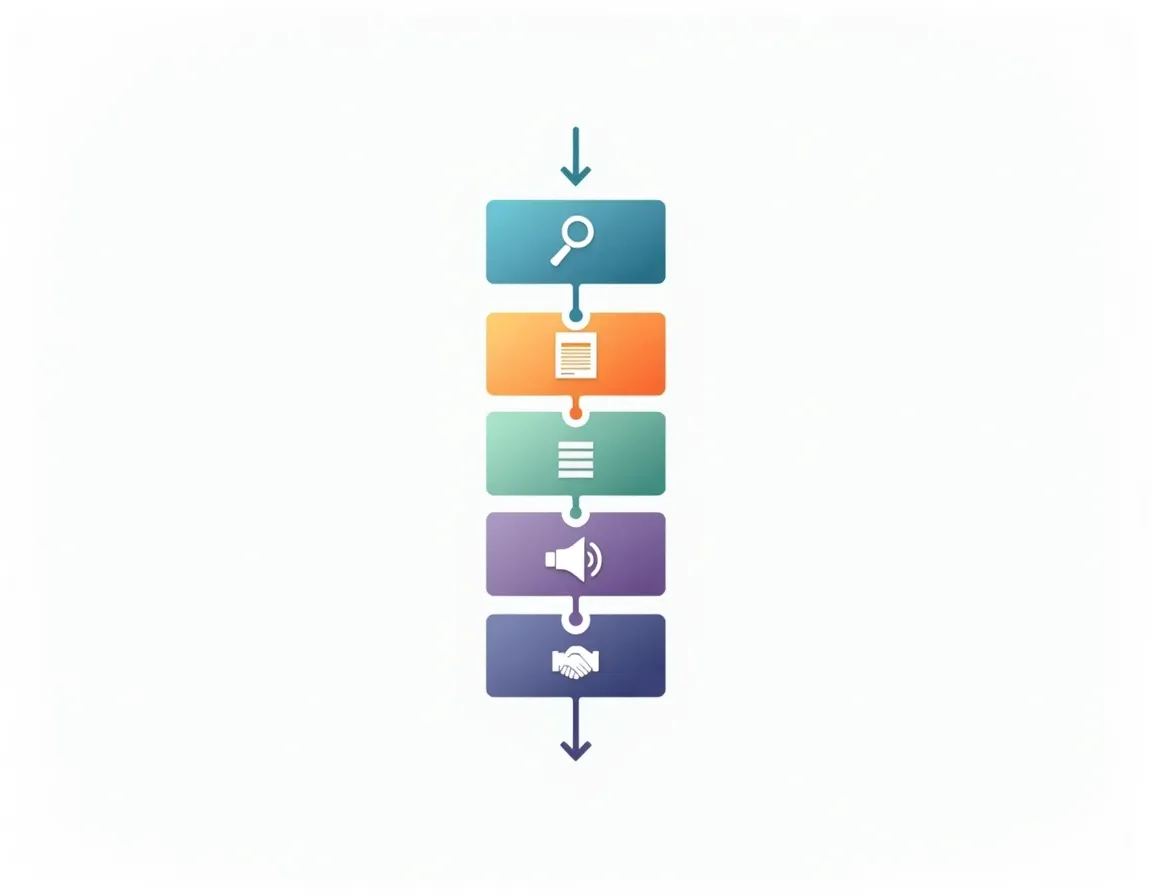
Front-load important information in your introductions. The opening paragraph should clearly state what problem the post addresses and what the reader will learn. Service business customers don’t have patience for lengthy preambles—they want to know immediately whether this content applies to their situation.
Include clear calls-to-action that guide readers toward the next step in your service process. A CTA doesn’t need to be aggressive—”Contact us for a free estimate” or “Schedule an inspection” work better than high-pressure urgency tactics. The reader has already qualified themselves by consuming your content; your CTA simply needs to make the next step obvious and easy.
Optimize post length based on the complexity of the topic and the competition for your target keywords. A post targeting “how to choose a general contractor” requires more depth than “what is a building permit.” Your content management strategy for small businesses should align word count with the information depth your audience needs and the content depth required to rank competitively.
Keyword Research and Optimization Techniques
Effective keyword research for service businesses focuses on intent rather than search volume. High-intent keywords indicate that the searcher is ready to hire someone, even if those terms have lower monthly search volumes than broader informational queries.
Research keywords that include qualifiers like “cost,” “near me,” “emergency,” “best,” or specific service terms that indicate purchase intent. Someone searching “HVAC maintenance tips” is in research mode. Someone searching “HVAC repair cost” or “emergency furnace repair” is actively looking for a service provider.
Analyze competitor blogs to identify content gaps in your service niche. Most service businesses either don’t blog at all or publish generic content that could apply to any market. When you create specific, detailed content that addresses underserved topics, you face less competition for those keyphrases and provide more value to readers.
Use keyword variations naturally throughout your posts without keyword stuffing. Modern search algorithms from Google’s SEO Starter Guide understand semantic relationships and synonyms. Writing “water heater repair,” “hot water tank service,” and “water heater troubleshooting” in different sections signals topical relevance more effectively than repeating one phrase mechanically.
Balance primary keywords with related long-tail keywords for comprehensive coverage. A primary keyphrase like “electrical panel replacement” should be supported by related terms like “circuit breaker upgrade,” “electrical service upgrade cost,” and “when to replace electrical panel.” This approach creates topical depth that improves rankings for multiple related searches.
Building Internal Links and Content Authority
Internal linking strategy serves multiple purposes for service business blogs. It improves SEO by establishing content relationships and distributing authority across your site. It increases engagement by guiding readers to related information. And it creates pathways from informational content to service pages where conversions happen.
Link related service pages to establish content clusters around your core offerings. If you publish posts about furnace maintenance, AC installation, and ductwork cleaning, those posts should link to each other and to your main HVAC services page. This cluster structure tells search engines that you have comprehensive coverage of the topic.
Reference previous blog posts to increase time on site and reduce bounce rates. When a reader finds value in one post and clicks through to related content, they’re building familiarity with your brand and expertise. Each additional page they visit increases the likelihood of contact.
Use descriptive anchor text that reinforces SEO relevance. Instead of “click here” or “read more,” use phrases that describe the linked content: “our guide to seasonal HVAC maintenance” or “commercial electrical safety requirements.” This approach helps both readers and search engines understand what they’ll find on the linked page.
Measuring Success: SEO Metrics That Matter
Service businesses need to measure blog performance differently than e-commerce sites. Your primary goal isn’t page views or time on site—it’s generating qualified service inquiries from people who have a problem you can solve.
Track organic traffic growth at the post level to identify which topics resonate with your target audience. Some posts will drive consistent traffic for years, while others serve niche queries with lower volume but higher conversion rates. Both types have value, but understanding the difference helps you refine your content marketing ROI tracking.

Monitor keyword rankings to measure improvement in search visibility for your target service terms. Ranking improvements take time—especially in competitive service markets—but tracking progress helps you understand which content strategies work and which need adjustment.
| Metric | What It Measures | Why It Matters for Service Businesses |
|---|---|---|
| Organic Traffic | Visitors from search engines | Indicates visibility in search results for target keywords |
| Conversion Rate | Percentage of visitors who contact you | Measures how well content qualifies and motivates leads |
| Keyword Rankings | Position in search results for target terms | Shows competitive standing in your service market |
| Pages per Session | How many pages visitors view | Indicates content relevance and internal linking effectiveness |
| Time on Page | How long visitors read your content | Suggests content quality and reader engagement |
Measure conversion rates from blog traffic to actual service inquiries. Install conversion tracking that distinguishes between visitors who arrived via organic search, what content they consumed, and whether they submitted a contact form or called. This data reveals which topics and content types generate the most qualified leads.
Analyze user engagement metrics like time on page and scroll depth to understand how thoroughly visitors read your content. High bounce rates might indicate that your content doesn’t match search intent, while low time on page could mean your introduction doesn’t engage readers effectively.
Scaling Your SEO Blog Strategy
Consistency matters more than perfection in service business blogging. Publishing one high-quality, optimized post every week outperforms publishing five mediocre posts one month and nothing the next three months. Search engines reward consistent publishing patterns, and readers come to expect regular content from authoritative sources.
Create a content calendar strategy that aligns with seasonal service demand patterns. HVAC companies should publish furnace content in fall and AC content in spring. Landscaping services should create content about seasonal yard challenges before customers search for solutions. This planning puts your content in search results when customer interest peaks.
Develop content clusters around core service offerings to build topical authority. Instead of random blog posts about loosely related topics, create comprehensive coverage of each major service category. Ten posts about different aspects of electrical work signal more expertise than ten posts scattered across unrelated home improvement topics.
Establish a publishing rhythm that maintains consistency without overwhelming your resources. Many service businesses struggle with content creation because they lack dedicated writing staff. AI blog automation platforms for home service companies can help maintain publishing consistency while you focus on service delivery, but the content must still reflect your specific expertise and brand voice.
SEO-optimized blog posts for service businesses work because they align with how customers actually search for solutions. When you consistently publish content that demonstrates expertise, addresses customer questions, and provides genuine value, you build the organic visibility that drives qualified leads to your business. The service providers that commit to this approach over months and years build a compounding advantage that paid advertising alone cannot match.
Ready to build a content strategy that generates leads? Contact us to learn how PublishPuffin maintains publishing consistency while you focus on serving customers.