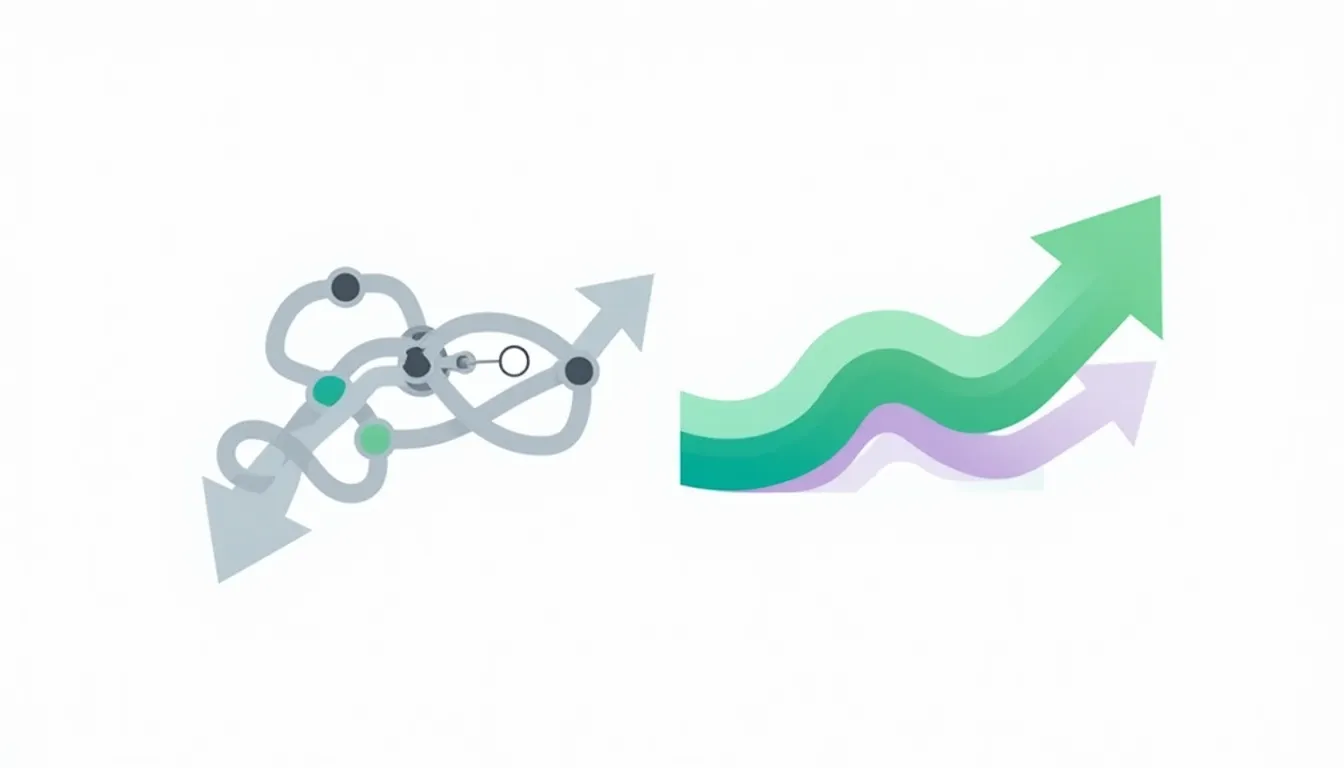
Content marketing delivers measurable business growth, but producing enough quality content to achieve results remains the biggest barrier for most companies. The ROI of automated content directly addresses this challenge: businesses publish more frequently, reach search visibility faster, and reduce production costs without sacrificing quality standards their audience expects.
Manual content creation requires substantial time investment across research, writing, editing, optimization, and publishing. Automated workflows compress these steps into streamlined processes that maintain quality while multiplying output. Companies that adopt content automation see faster ROI, lower customer acquisition costs, and the ability to scale without hiring more people or spending more money.
The Business Case: Automated Content Marketing ROI vs. Manual Blogging
Manual blogging demands significant resource allocation. A typical content program requires dedicated time for topic ideation, keyword research, drafting, editing cycles, SEO optimization, image sourcing, and WordPress publishing. For companies maintaining weekly publishing schedules, this translates to substantial ongoing investment in either internal staff hours or freelance writer contracts.
The automated content marketing ROI picture looks fundamentally different. Content automation platforms handle the full production workflow—from keyword research through final publication—with minimal manual intervention. This shift changes both the cost structure and the timeline for seeing results.
| Factor | Manual Blogging | Automated Content |
|---|---|---|
| Weekly Time Investment | Manual content creation requires substantial weekly time investment across planning, writing, and optimization | Automated workflows significantly reduce active team time to review, approval, and strategy activities |
| Monthly Output | Manual processes typically limit output capacity with individual writer constraints | Automated workflows enable substantially higher publishing frequency than manual processes |
| Cost Per Article | Manual content production involves significant per-article costs through freelancer contracts or internal labor allocation | Automation significantly reduces the per-article production cost compared to manual content creation |
| Time to ROI | Manual content production typically requires extended timeframes to achieve measurable returns | Automated content workflows typically enable faster ROI achievement than manual content production |
This efficiency multiplier allows marketing teams to redirect their focus from production tasks to strategic activities: analyzing performance data, refining audience targeting, optimizing conversion paths, and developing distribution strategies. The content marketing data supports this approach—publishing frequency directly correlates with search visibility and lead generation performance.
For businesses operating on lean marketing budgets, the cost reduction alone justifies automation investment. But the strategic advantage extends beyond immediate savings. Consistent publishing builds domain authority, expands keyword coverage, and creates the content library necessary for comprehensive search presence. Companies learn which content marketing ROI metrics matter most when they have sufficient data volume to analyze patterns and optimize performance.
Automated Blogging vs Manual Blogging: The Efficiency Gap
Manual content workflows introduce bottlenecks at every production stage. A single blog post moves through ideation, research, outlining, drafting, editing, SEO review, image selection, meta data creation, and publishing—each step requiring handoffs between team members or waiting periods.
Automated workflows eliminate these wait times. Modern content automation platforms integrate the entire production pipeline into sequential, automated processes. Keyword research feeds directly into content generation. SEO optimization happens during creation rather than as a separate review step. Publishing occurs on schedule without manual intervention.
Key insight: The efficiency advantage of automation isn’t just about speed—it’s about removing the coordination overhead that makes consistent publishing difficult for small teams.
This consistency matters more than most businesses realize. Search algorithms favor websites that publish regularly. Audience engagement improves when readers expect new content on predictable schedules. Sales teams benefit from having fresh content to share with prospects. The automated content workflow makes maintaining this cadence manageable rather than overwhelming.
Team members previously occupied with writing tasks can focus on activities that automation can’t replace: developing content strategy, building industry partnerships, creating multimedia content, engaging with community comments, and refining brand positioning. This shift transforms content teams from production departments into strategic marketing functions.
Content Automation Tools ROI: Measuring What Matters
Proving the ROI of automated content requires tracking specific metrics that demonstrate business impact. Vanity metrics like total page views or social media impressions don’t tell the full story. The metrics that matter connect content performance to revenue outcomes and operational efficiency.
Traffic and Visibility Metrics
Organic traffic growth shows whether your content reaches the audiences searching for your solutions. Track overall organic sessions, but also segment by content type, topic category, and publishing date to identify which content drives the most valuable traffic. Monitor keyword rankings for your target terms—expansion of ranking positions indicates growing search visibility.
Lead Generation Performance
Content exists to support business goals, and for most companies, that means generating qualified leads. Measure lead generation volume from organic channels, conversion rates on content-driven landing pages, and cost-per-acquisition compared to paid channels. Track form submissions, demo requests, consultation bookings, and other conversion actions that indicate genuine interest.

Engagement Quality Indicators
Time on page, scroll depth, and return visitor rates reveal whether your content holds attention and provides value. Low engagement scores suggest content isn’t meeting reader needs, even if it ranks well. Track these metrics alongside traffic volume to ensure you’re not just attracting visitors but actually serving them useful information.
Production Efficiency Measures
Document your publishing frequency, content output per team member, and time-to-publish for new content. These operational metrics demonstrate the productivity multiplier automation provides. Calculate your fully-loaded cost per published article—including platform fees, review time, and any manual intervention—to show true cost savings compared to traditional production methods.
According to Content Marketing Institute research, businesses that document their content strategy are more likely to report success. The same principle applies to measurement: companies that track these specific metrics can prove content value to stakeholders and make data-driven optimization decisions.
Content Automation Software for Digital Marketing: Real-World Performance
Content automation platforms have matured significantly. Modern solutions handle complex workflows that previously required multiple specialized tools and significant coordination. A unified system handles keyword research, content brief generation, SEO optimization, brand voice matching, and publishing automation in sequence.
The best solutions include quality validation steps so output meets editorial standards before publication. This combination of automation and quality control addresses the main concern businesses have about automated content: maintaining the brand voice and accuracy standards their audience expects.
The performance data from businesses using these platforms shows measurable impact. Companies report improved lead generation, expanded keyword coverage, and reduced content production costs. The multi-channel publishing capabilities—generating blog content, email newsletters, and social posts from the same content creation process—multiply the value of each piece of content produced.
For small and mid-sized businesses, this technology levels the playing field. Companies can compete for search visibility without maintaining the large content teams that enterprise competitors employ. The autonomous content engine approach allows lean marketing departments to execute content strategies that previously required multiple full-time content creators.
B2B companies particularly benefit from this approach. Longer sales cycles and complex buyer journeys in B2B markets require substantial content libraries covering every stage of the decision process. Automation makes building and maintaining these comprehensive content programs feasible for companies without dedicated content departments. Read more about how autonomous content engines work for small business marketing.
Why Automated Content Is Better: Strategic Advantages Beyond Volume
The question of why automated content is better extends beyond simple efficiency gains. Automation introduces strategic capabilities that manual processes can’t match at scale.
Data-Driven Decision Making
Automated content systems generate performance data across every published piece. This data volume enables pattern recognition that’s impossible with smaller content libraries. You can identify which topics drive engagement, which formats convert best, and which keywords deliver highest-quality traffic. These insights inform strategy with empirical evidence rather than intuition.

Consistent Brand Voice
Maintaining voice consistency across a large content library challenges even experienced editorial teams. Different writers naturally have different styles. Quality varies between freelancers. Manual editing can only catch so many inconsistencies. Automated platforms trained on your specific brand voice apply that voice consistently so your audience experiences the same tone and style regardless of which article they read.
Faster Iteration Cycles
Manual content production makes testing difficult. Creating multiple versions of content for A/B testing, experimenting with different formats, or rapidly responding to new search opportunities requires resources most teams don’t have. Automation enables rapid testing and iteration. You can experiment with different approaches, measure results, and refine your strategy based on actual performance rather than theory.
Improved Search Performance
Publishing frequency directly impacts search visibility. Websites that publish consistently signal to search algorithms that they’re active, authoritative sources of information. Automated content enables the publishing consistency that builds domain authority over time. The compounding effect of regular publishing—each new piece of content supporting and linking to existing content—creates a network of related information that strengthens your overall search presence.
Content Automation Efficiency Metrics: The Numbers That Drive Decisions
Understanding content automation efficiency metrics helps businesses set realistic expectations and measure progress toward content marketing goals.
Publishing velocity measures how much content your team produces per time period. Track monthly article output per team member to quantify the productivity multiplier automation provides. Automated workflows typically enable teams to produce substantially more content than manual processes, even accounting for review and approval time.
Quality consistency tracks how often content requires substantial revisions before publication. Lower revision rates indicate the automation system reliably produces content that meets your quality standards on first draft. This metric proves particularly important for stakeholders concerned about maintaining editorial standards with automated production.
Time-to-publish measures the elapsed time from content concept to live publication. Manual workflows often require weeks from initial planning to final publication. Automated workflows compress this timeline substantially, enabling faster response to market opportunities, trending topics, or competitive developments.
Revenue attribution connects content performance to business outcomes. Track how many leads, opportunities, and closed deals originated from organic content. Calculate the revenue value of your content library and compare it to your total content program investment. This metric demonstrates whether your content automation investment delivers positive financial returns.
These efficiency metrics complement traffic and engagement metrics. Together, they show how automation improves both production operations and business outcomes. Companies that measure these metrics can optimize content strategy, choose the right platform, and allocate resources more effectively.
Making the Transition to Automated Content Marketing
The ROI of automated content becomes clear when businesses move beyond theoretical benefits and examine actual implementation. Companies see measurable improvements in content output, publishing consistency, cost efficiency, and ultimately, lead generation performance. The strategic advantages—data-driven optimization, faster iteration, and freed-up team capacity for high-value activities—compound these operational benefits.
Content automation doesn’t eliminate the need for human expertise. It redirects that expertise toward strategy, optimization, and distribution rather than repetitive production tasks. Teams that embrace this shift find they can execute more ambitious content strategies than previously possible while maintaining the quality standards their audience expects.
Explore how PublishPuffin’s autonomous content engine handles the full workflow—from keyword research to published posts. Schedule a demo to see your content strategy in action, or contact us to discuss how autonomous content generation works for your business.