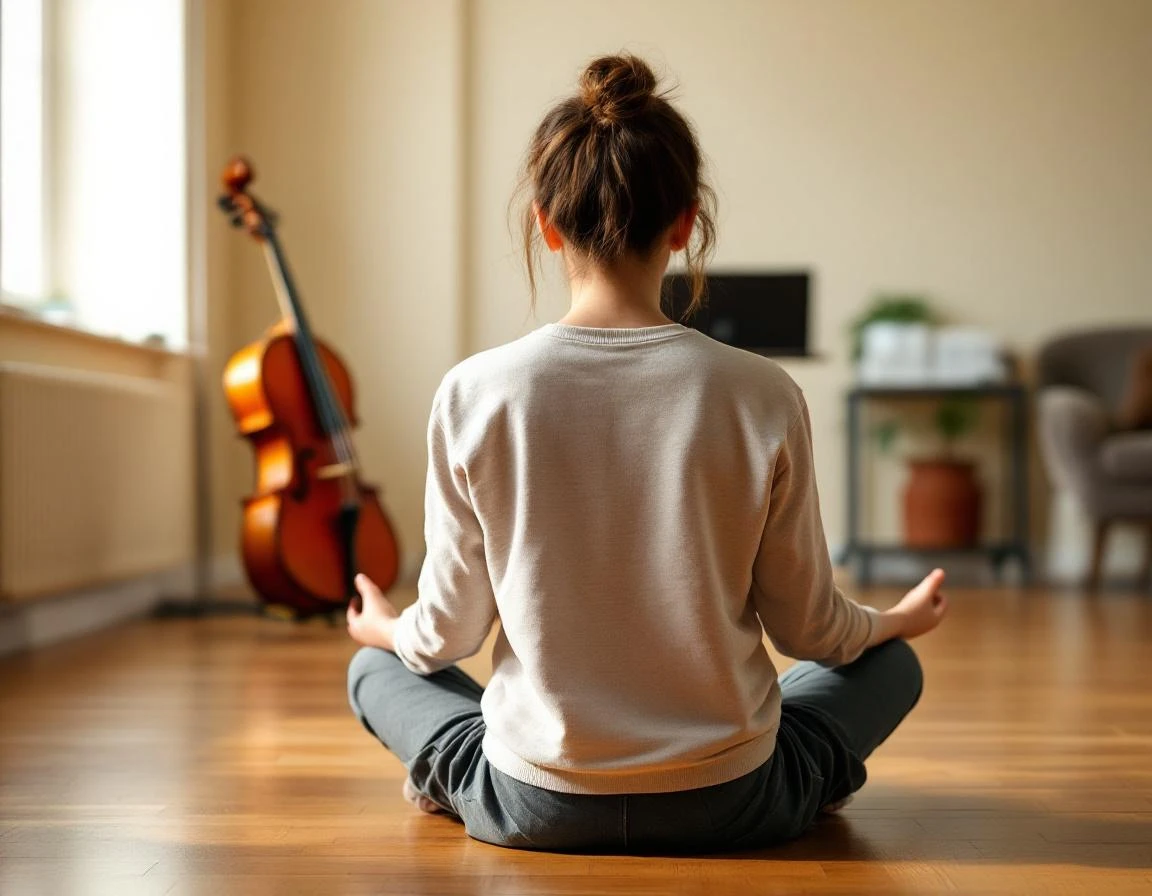
The Performance Anxiety Problem in Music Studios
Performance anxiety affects most music students before recitals, creating a barrier between technical ability and confident execution that frustrates students and concerns parents. For many music students dealing with performance anxiety, the disconnect between practice room mastery and stage execution becomes a critical obstacle that teachers must address directly.
Performance anxiety is a recognized concern among music professionals.
Research shows that performance anxiety affects 40-60% of music students before recitals and competitions, creating a gap between practice room competence and stage execution. When anxiety takes hold, even technically proficient students experience shaky hands, memory lapses, and rushed tempos that undermine months of skill development.
The physiological stress response interferes with fine motor control precisely when students need it most, turning confident practice performances into nerve-wracked public experiences that discourage continued musical growth.
Parents seek teachers who address emotional
Parents notice when their children know the notes but freeze under pressure.
The most successful music studios recognize that performance anxiety isn’t a secondary concern—it’s a barrier that determines whether students continue lessons past the first recital.
Teachers who integrate anxiety management into their curriculum address the disconnect parents observe between practice room confidence and stage performance.
Studios that explicitly teach calming techniques and emotional preparation don’t just produce better performers—they build measurable business advantages. Parents refer friends to teachers who acknowledge the psychological dimension of performance, not just finger placement. Student retention climbs when anxiety is treated as a teachable skill rather than a character flaw, transforming recitals from sources of dread into opportunities for demonstrable growth.
Grounding Techniques for Immediate Calm
Grounding techniques work by interrupting the nervous system’s fight-or-flight response in the minutes before performance. When students feel anxiety building backstage or in the green room, their sympathetic nervous system activates, creating physical symptoms like rapid heartbeat, shallow breathing, and muscle tension. Grounding methods create a physiological shift that brings students back to the present moment and reduces these symptoms before they walk onstage.
The 5-4-3-2-1 sensory method anchors students to their immediate environment through focused observation. Students identify five things they can see, four they can hear, three they can touch, two they can smell, and one they can taste. This deliberate engagement with sensory input redirects attention away from anxiety-producing thoughts and toward concrete, present-moment awareness. The technique takes approximately two minutes and requires no special equipment, making it practical for any performance setting.
Box breathing provides a complementary approach through controlled respiration. Students breathe in for four counts, hold for four counts, exhale for four counts, and hold again for four counts, repeating the cycle four to six times. This pattern activates the parasympathetic nervous system, which counteracts the stress response and slows heart rate. Many teachers pair box breathing with progressive muscle relaxation, where students tense and release muscle groups from toes to shoulders.
Practice these techniques during regular lessons, not just before recitals. Students who practice grounding weekly for eight to twelve weeks build muscle memory that makes the techniques automatic under stress.
Teach students two to three methods so they can select the approach that feels most natural when anxiety peaks.
This foundation creates the mental space needed for visualization and positive self-talk to work effectively during the final minutes before performance.
Mental Visualization and Performance Rehearsal
Visualization operates as a cognitive rehearsal tool that primes students for both the emotional and physical demands of performance. When students mentally walk through their piece—seeing themselves execute passages, hearing the sound, feeling their body position—they activate the same neural pathways used during actual practice. This mental rehearsal reinforces technique without instrument in hand, making it a valuable supplement to physical practice sessions.
Effective visualization extends beyond imagining flawless execution. Students should practice two distinct mental exercises:
- Success visualization. Where they see themselves performing confidently and recovering smoothly from minor slips
- Technical rehearsal. Where they mentally walk through fingering, breath control, or bow movement measure by measure
The recovery component matters enormously—students who visualize realistic scenarios, including minor mistakes and their calm response, build resilience rather than perfectionist anxiety.
Studios should introduce visualization practice 4-6 weeks before recitals. Asking students to dedicate 5-10 minutes to mental rehearsal 3-4 times weekly. Teachers can record guided visualization scripts customized for each student’s piece, which students review at home. These scripts walk through the performance environment, the opening measures, transitions between sections, and the emotional satisfaction of completing the piece.
This practice creates documentary evidence of preparation. Studios tracking visualization logs can show parents that their child has mentally rehearsed dozens of times before stepping onstage—preparation that goes well beyond technical drills. Parents see structured anxiety management as part of the curriculum. Not an afterthought, which builds trust in the studio’s complete approach to performance readiness.
Deliberate Practice and Anxiety Resilience
Deliberate practice forms the foundation that determines whether music performance anxiety techniques succeed or fail during performance moments. Students who engage in structured practice that mirrors performance conditions—playing their piece at full tempo, with complete dynamics, from beginning to end without stopping—develop intrinsic confidence that superficial preparation cannot provide. This isn’t about practice duration; it’s about practice design.
The implementation framework centers on weekly goal-setting conversations between teacher and student. Each week, students identify specific technical passages to master and set performance-readiness milestones. Teachers document progress through practice logs that track full-run attempts, tempo achievements, and performance readiness scores. This creates tangible evidence students can review: concrete proof that preparation depth directly correlates with anxiety reduction.
The progression timeline moves students through graduated exposure stages:
- Start with solo practice runs at home
- Progress to teacher-only performances during lessons
- Advance to small group settings with fellow studio students
- Finally, move to formal recital settings
Each stage builds tolerance for performance pressure while maintaining an appropriate challenge-to-skill ratio—difficult enough to require focused effort but achievable enough to avoid overwhelming anxiety.
Music studios that implement this system celebrate milestone achievements at each progression stage: the first successful full-tempo run, the first performance without a memory slip, the first time a student recovers gracefully from a mistake. These celebrations reinforce the connection between preparation depth and performance confidence. Students learn that anxiety decreases not through wishful thinking, but through systematic skill development that builds confidence through documented progress.

Performance Simulation and Stage Fright Exposure Practice
Performance simulation adapts systematic exposure therapy principles for music students, creating realistic performance conditions that train the nervous system to regulate anxiety responses. Unlike visualization, which operates as mental rehearsal, simulation involves actual performance with all its physical and emotional demands—standing before an audience, managing adrenaline, recovering from mistakes in real time. This approach to helping students overcome stage fright introduces graduated challenges that build genuine confidence.
A structured 8-12 week simulation timeline builds measurable confidence through progressive exposure:
- Weeks 1-4 focus on studio class performances where students play for peers in low-pressure settings, learning to execute technical passages while managing mild nervousness. These sessions introduce the sensation of performing under observation without high-stakes consequences.
- Weeks 5-8 advance to group recitals with combined studio families, creating moderate pressure that mirrors the emotional intensity of formal events while maintaining supportive atmospheres.
- Weeks 9-12 culminate in formal recitals or competitions. The high-pressure target performances where students apply anxiety management skills under realistic conditions.
Recording simulated performances creates another layer of anxiety reduction. Research demonstrates that self-listening increases objective awareness of performance quality. Helping students recognize that their subjective experience of anxiety doesn’t necessarily translate to audible problems. Students who review recordings report reduced self-criticism, noting that mistakes they perceived as catastrophic during performance sound minor upon playback.
For music studios, documented simulation programs provide tangible evidence of confidence development. Parents researching teachers during peak enrollment periods—particularly the back-to-school season when music lesson searches intensify—respond to programs that treat performance anxiety as a systematic skill rather than an insurmountable obstacle. Studios that photograph recitals, track student progression through exposure stages, and share testimonials about confidence growth build parent trust through demonstrable outcomes.

Mindset Reframing and Self-Talk Strategy
The physical symptoms students experience before recitals—improved heart rate, faster breathing, heightened focus—are neurologically identical to excitement. Cognitive science reveals that anxiety and excitement activate the same nervous system responses: adrenaline release, increased alertness, and muscle readiness. The difference lies entirely in how students interpret these signals.
When students learn to reframe physiological activation as readiness rather than danger. They experience measurable anxiety reduction and improved performance outcomes.
Music educators who teach reframing strategies help students replace catastrophic thinking with evidence-based self-talk. Instead of “I’m too nervous to play well,” students practice scripts like “My racing heart means my body is ready to perform” or “I’ve practiced this piece 100+ times—my hands know what to do.” When students make mistakes during practice simulations, instructors guide them toward growth-oriented language: “Mistakes are part of the learning process” rather than “I always mess up.” This shift from fixed to growth mindset reduces fear of judgment and builds resilience through repeated exposure to realistic challenges.
Implement a weekly script-practice routine during the final five minutes of each lesson. Have students verbalize two positive reframes about their upcoming performance while standing in performance posture. Teachers can model this by sharing their own reframing experiences: “Before my college recital, I learned to think of butterflies in my stomach as energy I could channel into expression.” This routine transforms abstract concepts into practiced habits students can deploy when stress peaks backstage.
Mindset reframing is the capstone technique that integrates grounding, visualization, deliberate practice, and performance simulation into a coherent confidence-building system. Studios that teach all five techniques create documented evidence of student anxiety reduction and emotional resilience—tangible outcomes that differentiate them from competitors focused exclusively on technical instruction. Parents recognize and value educators who address how to reduce performance anxiety in recitals as a teachable skill, generating referrals based on observable transformation in student readiness and stage presence.