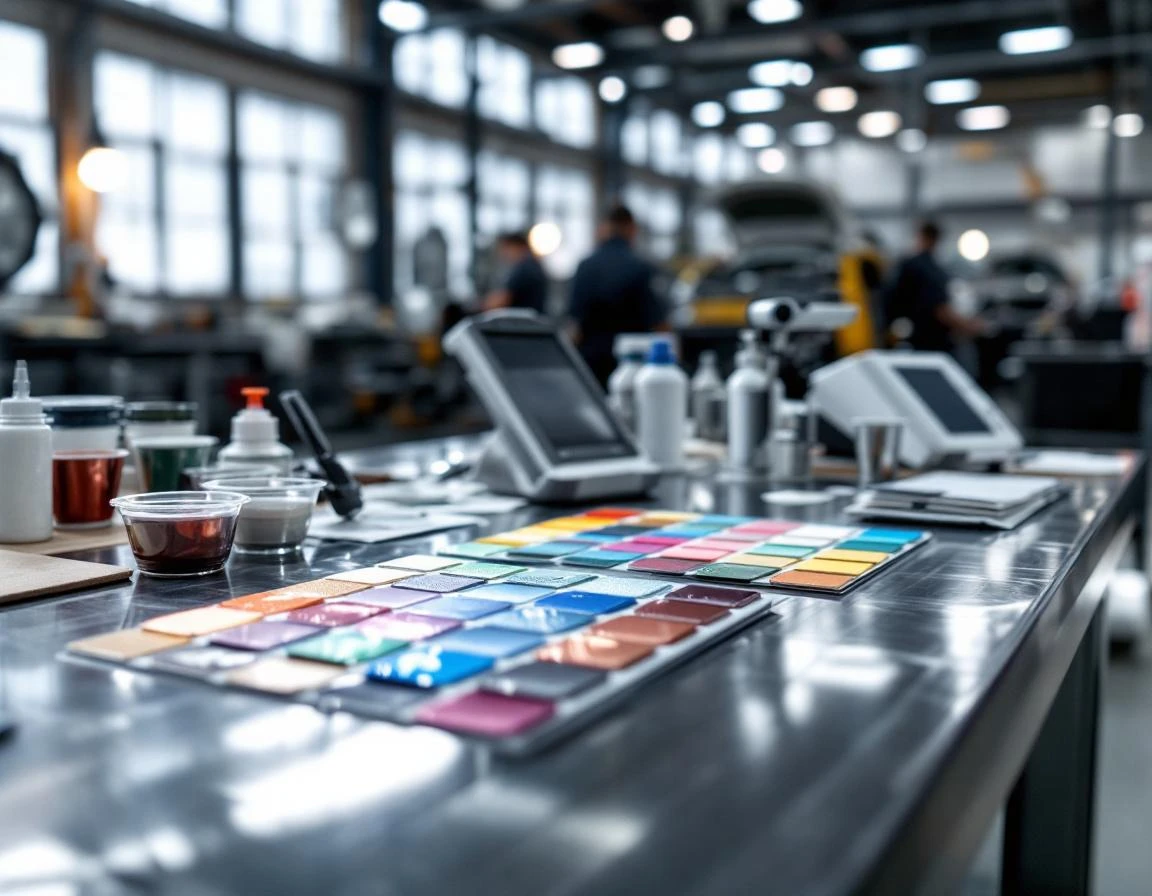
Why Paint Color Mismatch Happens
When customers search for “paint color mismatch after repair,” they’re not looking for apologies—they’re searching for shops that understand the technical variables that caused the problem in the first place. Color matching failures stem from environmental, material, and process variables that national chains often overlook in their standardized workflows. A repair that looks perfect under shop fluorescent lighting can reveal stark differences in natural sunlight because the application environment wasn’t controlled or documented.
Temperature and humidity during paint application directly affect how solvents evaporate and pigments settle. Apply basecoat at 65°F versus 75°F, and you’ll see different metallic flake orientation. High humidity slows flash times, changing how layers interact. These aren’t minor details—they’re the difference between a color match that passes inspection and one that sends customers back three weeks later.
Local collision shops that document these variables build credibility with post-repair customers because they can explain exactly what happened and how they’ll correct it.
That transparency—tracking booth temperature, noting paint batch numbers, photographing blend panels under multiple light sources—turns a complaint call into an opportunity to demonstrate technical expertise that generic chain locations simply cannot match.
Professional Paint Matching Process
The professional paint matching workflow begins with spectrophotometric analysis—a device that measures the exact color wavelength of the existing paint, capturing data points that account for fade, oxidation, and environmental wear. This digital reading generates a formula that establishes the baseline for matching, but it’s only the first checkpoint in a multi-stage process. Auto body shops that document this initial analysis create content that ranks for searches like “why does my paint look different after repair” or “how do body shops match paint color,” capturing customers who are researching quality indicators before choosing a repair facility.
Once the formula is generated, the primer selection stage determines how the base coat will bond and appear. Different substrates—aluminum panels versus steel, plastic bumpers versus metal doors—require specific primer formulations that affect the final color depth. Applying primer without accounting for substrate differences creates the foundation for visible mismatch, even when the topcoat formula is correct. Shops that publish detailed explanations of primer selection demonstrate technical rigor that differentiates them from competitors who treat priming as a generic step. This transparency builds trust with customers who found the shop through symptom-based searches about repair quality.
Base Coat Application and Environmental Controls
Base coat application requires controlled temperature and humidity conditions—maintaining stable environmental parameters around room temperature—to allow proper flash time between coats. The spray technique itself introduces variables: gun distance, overlap pattern, and air pressure all affect how metallic flakes orient themselves in the paint film. Each coat receives a visual inspection under color-corrected lighting before the next layer goes on, creating checkpoints where technicians can adjust spray parameters if the color starts trending off-target. Documenting these checkpoints in blog content or service descriptions addresses customer concerns about quality assurance, particularly for insurance-directed repairs where the shop wasn’t the customer’s first choice.
Clear Coat Finishing and Final Verification
The clear coat stage determines gloss level and UV protection, but it also influences color perception through film thickness and application uniformity. A clear coat applied too thick can appear cloudy; too thin, and the base coat won’t have adequate depth. The final quality check happens under multiple lighting conditions—daylight, shade, and artificial light—because color appearance shifts based on viewing environment. Shops that photograph and document this verification process create visual content that performs well in image searches and builds confidence with customers comparing repair options. This stage-by-stage documentation strategy positions local collision centers as technically sophisticated alternatives to national chain estimators who can’t publish facility-specific quality protocols.
Spectrophotometer Analysis Step
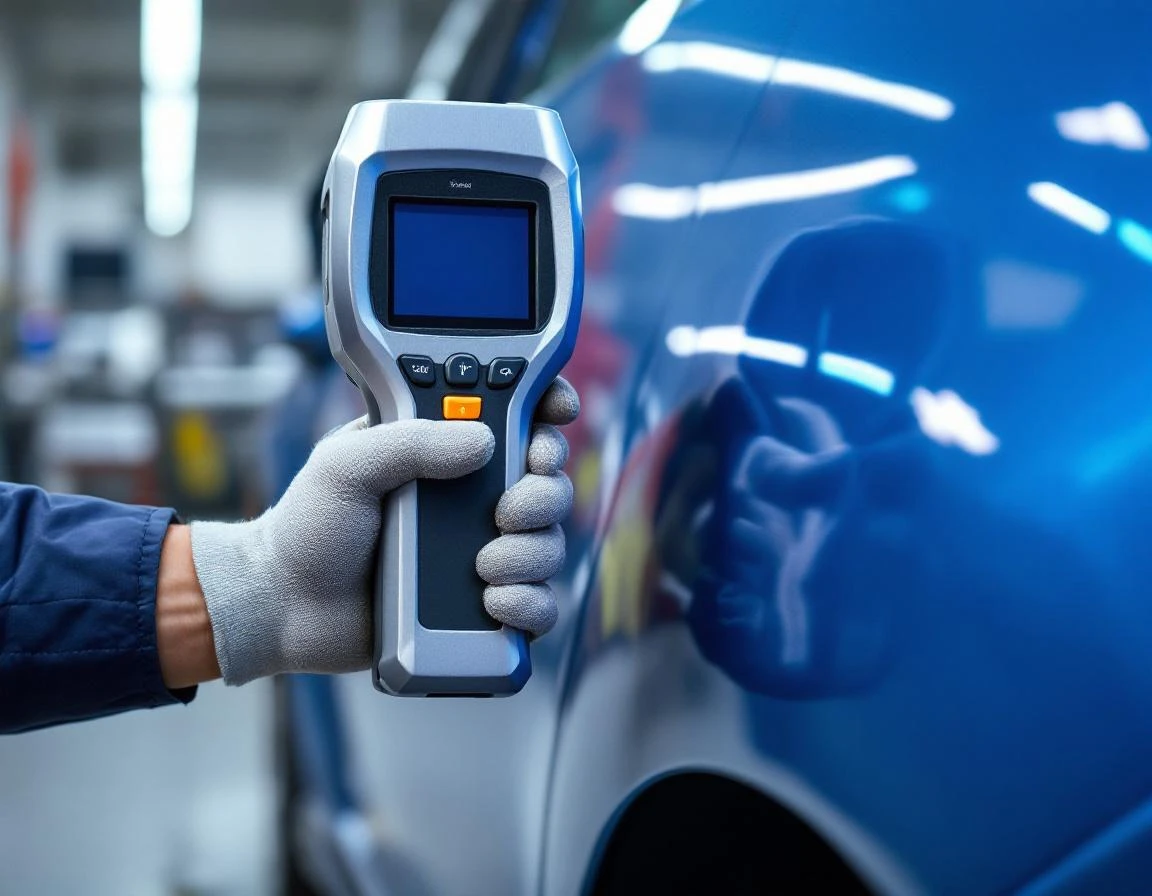
Professional paint matching starts with spectrophotometer technology, which captures precise color data by measuring how light reflects off the original undamaged panel at multiple wavelengths. This device analyzes the factory paint’s exact pigment composition, accounting for age-related fading and environmental oxidation that affects every vehicle differently.
Technicians take readings under three distinct light sources—daylight, fluorescent, and incandescent—to prevent metamerism, the phenomenon where two colors appear identical under one lighting condition but mismatch under another. This step prevents the common customer complaint where a repair looks perfect in the shop but shows color variation in outdoor sunlight or parking garage lighting.
The spectrophotometer data directly informs paint formulation parameters and spray gun settings. Collision shops that use computerized paint matching technology photograph this analysis step and explain the multi-light verification process in published content answer the exact question frustrated customers search: why their repair looked fine initially but appears off-color later.
Application Environment Control
Professional collision shops maintain spray booth environments within narrow parameters: 68-77°F temperature and 40-60% humidity. These ranges control solvent evaporation rates during base coat application, preventing surface texture issues and color shifts as metallic flakes settle. Shops that publish their booth specifications—including downdraft filtration systems and temperature monitoring—differentiate themselves from competitors who apply paint in uncontrolled environments.
National chains face consistency challenges across locations. A franchise in Phoenix operates under different ambient conditions than one in Seattle, yet both must deliver identical color matches. Independent shops document their controlled environments through blog content and facility tours, answering searches from customers who’ve experienced color mismatches and want verification of proper conditions before committing to repairs.
Color Correction and Adjustment Techniques
When the initial paint application doesn’t meet the shop’s quality standards, professional technicians follow a systematic correction workflow that addresses both formulation chemistry and application technique. This correction process separates experienced collision centers from shops that settle for close-enough matches.
The ability to diagnose and resolve color variance demonstrates technical competence that customers actively research when choosing a repair facility.
The most common correction approach involves adding specific toners to the paint formula after identifying which color component created the mismatch. A blue metallic that appears too green under daylight conditions typically requires additional blue pearl toner, while a silver that reads too warm needs gray or white base adjustments. Technicians spray small test panels with each adjustment, comparing results under both natural and artificial lighting before applying the corrected formula to the vehicle.
Application technique refinements address mismatches caused by spray parameters rather than formula issues. Key adjustments include:
- Adjusting spray gun distance from 8 inches to 6 inches to increase paint density and color depth
- Modifying air pressure from 28 PSI to 25 PSI to change droplet atomization and metallic flake orientation
- Extending curing time to address color shifts that occur during the drying process
- Reducing oven temperature or extending air-dry time before baking to slow solvent evaporation
Documenting each correction attempt—the specific toner additions, parameter changes, and test results—creates a quality assurance record that proves commitment beyond first-pass application. This documentation addresses how vehicle paint aging affects color matching and provides evidence of technical problem-solving when mismatches occur.
Quality Assurance Checkpoints
The final quality gate separates shops that guess from shops that measure. Before releasing a repaired vehicle, professional collision centers execute a multi-point inspection protocol that catches color variance invisible during application but obvious to customers in their driveway. The quality assurance process includes:
- Spectrophotometer re-verification—technicians capture fresh readings from the cured repair area and compare against baseline data from adjacent original panels, documenting color delta-E values that confirm match tolerance within industry standards
- Lighting comparison—positioning the vehicle under multiple light sources including direct sunlight, shaded outdoor conditions, fluorescent shop lighting, and LED inspection arrays to test for metamerism effects
- Customer approval checkpoints—walking owners through the inspection process, pointing out match verification under varied lighting and explaining the spectral readings that confirm accuracy
This side-by-side evaluation reveals whether the match holds across the lighting conditions customers encounter daily. Shops that photograph these comparison stages create documentation proving diligence when disputes arise months after delivery. Before final handoff, technicians walk owners through the inspection process, pointing out match verification under varied lighting and explaining the spectral readings that confirm accuracy. This transparency protocol accomplishes two business objectives: it prevents post-delivery complaints by setting clear expectations, and it demonstrates technical competency that distinguishes qualified shops from operations rushing vehicles out the door.
Collision centers publishing detailed QA protocols capture search traffic from customers researching paint quality assurance automotive and related repair verification queries. National chains cannot replicate this documentation-driven differentiation because franchise content avoids shop-specific process detail. Local businesses that share pass-fail criteria, spectral tolerance thresholds, and multi-stage verification workflows build authority in the exact searches where customers seek reassurance about repair outcomes.
Publishing Paint Expertise Locally
The technical processes detailed above—spectrophotometer analysis, environmental controls, correction workflows, and multi-point quality assurance—become competitive assets only when customers can find them. Collision shops that document and publish their matching process with before-and-after images and technical detail rank for symptom-based searches better than national chains with generic content. When a car owner searches “why does my repair not match in sunlight” or “how to fix paint color difference after collision,” shops with published correction protocols appear as expert resources, not paid advertisements.
Before-and-after case studies tied to specific processes prove capability to anxious customers. A blog post documenting a silver metallic Honda repair—complete with spectrophotometer readings, primer selection rationale, and multi-lighting verification—demonstrates mastery that generic “we do quality work” claims cannot. Consistent publishing of technical content builds topical authority in “local collision shop paint expertise” searches, positioning your shop as the specialist customers trust with complex repairs.
National chains publish templated guides applicable to any location. Local shops that use state-of-the-art paint-matching technology and expert blending techniques publish their specific, documented processes. That distinction drives search visibility and customer confidence. Start with one before-and-after case study tied to a recent challenging repair, or write one process guide explaining your color verification protocol. Publish it to your internal blog, and you’ve translated technical expertise into discoverable authority that national competitors cannot replicate.