Why Pet Accidents Demand Immediate Action
Pet urine and fecal matter begin bonding with carpet fibers within minutes of contact, starting a chemical process that becomes exponentially harder to reverse as hours pass. When accidents happen, emergency pet stain removal becomes your most effective defense against permanent damage.
Pet urine sets permanently within 24 hours due
Once urine penetrates carpet fibers, the clock starts on a chemical process that ends in permanent damage. Uric acid crystals form within 24 hours. Binding to carpet backing and padding in ways that standard cleaning can’t reverse. These crystals don’t just stain—they create odor reservoirs that reactivate with moisture.
Spring conditions make this timeline even tighter. April and May humidity keeps carpets damp longer, while warm temperatures create ideal conditions for bacterial growth. The combination accelerates both crystallization and odor development, cutting your effective response window from 24 hours to as few as 12.
“First-hour containment prevents the need for carpet replacement.”
Speed determines whether you face a service call or full carpet replacement. Pet accidents contained within the first hour prevent permanent fiber damage that would necessitate replacing the carpet entirely.
The biological compounds in pet waste bond with carpet fibers through a chemical process that accelerates exponentially after the initial hour.
Professional removal services contacted within the same day achieve complete stain and odor elimination before uric acid crystals form deep in carpet padding. Once crystallization occurs, the damage requires not just surface cleaning but pad replacement and subfloor treatment. The difference between immediate action and delayed response is measured in thousands of dollars, not hundreds.
5-Step First Hour Containment Protocol
The first 60 minutes after a pet accident determine whether you’ll need a quick cleanup or a carpet replacement. This five-step protocol stops urine from penetrating into carpet backing and prevents the bacterial growth that creates permanent odor.
- Step 1: Blot without rubbing. Use white paper towels or clean rags to press firmly on the accident site, absorbing surface moisture before it travels deeper into carpet fibers and backing. Rubbing spreads urine laterally and pushes it down into padding. Replace towels as they saturate and continue blotting until minimal moisture transfers.
- Step 2: Apply enzymatic cleaner. Spray or pour enzymatic cleaner directly onto the affected area, saturating the spot completely. These cleaners contain bacteria that feed on uric acid crystals—the compound responsible for persistent pet odor that water-based cleaners cannot remove. Standard carpet cleaners mask odor temporarily; enzymatic formulas eliminate it at the molecular level.
- Step 3: Let sit 10–15 minutes. The enzymatic bacteria need contact time to break down urine compounds. Covering the area with a damp towel during this window prevents premature drying and keeps the enzymes active. This waiting period is when the actual neutralization happens.
- Step 4: Blot again. After the contact time, blot the area thoroughly to remove the enzymatic solution and dissolved urine compounds. This second blotting session extracts the breakdown products that the enzymes created.
- Step 5: Ventilate and isolate. Open windows and run fans to accelerate drying, which stops bacterial growth. Prevent pets from returning to the spot during the drying period. Take photos of the affected area from multiple angles—if discoloration or odor persists after 48 hours, these images help professional cleaners assess whether padding replacement is necessary.
Signs Your Carpet Needs Professional Treatment
DIY containment works for small, surface-level accidents caught immediately. But certain conditions push the damage beyond what consumer-grade equipment can address. When pet accidents saturate deeper than the visible carpet fibers, or when multiple incidents compound in the same area, home treatment stops working.
Stains larger than 12 inches in diameter typically indicate saturation that has reached the carpet backing or padding beneath. At this depth, portable extractors and rented machines cannot generate enough suction to pull moisture and contamination from the base layers. Professionals use truck-mounted extractors that produce four to six times more vacuum power than consumer rentals, enabling deep extraction that removes uric acid crystals embedded in padding.
Odor that persists beyond 24 hours after treatment signals damage to the carpet backing or subfloor. Surface-level enzymatic treatments cannot penetrate deeply enough to neutralize bacteria growing in saturated padding. Professional equipment accesses these layers, applying enzymatic solutions directly to backing materials and extracting contaminated moisture before bacterial colonies establish permanent odor sources.
Multiple accidents in the same location create compounding saturation that overwhelms DIY methods. Each incident drives moisture and biological matter deeper into padding, creating conditions where only professional extraction prevents permanent damage. Rental agreements often mandate professional cleaning certification for deposit protection when pet damage occurs, making same-day professional service both a preservation measure and a contractual requirement. Discoloration or visible backing exposure indicates fiber damage that requires professional assessment and potential repair before the affected area spreads.
Spring Urgency: Why April Accidents Are Riskier
April through May creates a perfect storm of conditions that make pet accidents far more damaging than winter incidents. Once outdoor temperatures climb above 65°F, bacterial growth accelerates inside carpet fibers, breaking down urine compounds into increasingly pungent odor molecules that penetrate deeper into padding with each passing hour. What might stay contained in February becomes an expanding contamination zone in April.
High humidity compounds the problem by preventing moisture evaporation. Instead of drying naturally, urine stays trapped in carpet backing where bacteria thrive. This extended moisture contact gives uric acid crystals more time to bond with fiber structures, making removal progressively harder as days pass. The same accident that allows a 48-hour response window in dry winter conditions may lock in permanent damage within 24 hours during humid spring weather.
Spring also brings behavioral changes that increase accident frequency. Pets experience seasonal anxiety as household routines shift, outdoor access transitions begin, and territorial instincts heighten with wildlife activity. Extended daylight masks visual stain detection—what’s obvious under evening lighting disappears in bright afternoon sun, allowing damage to progress unnoticed until odor becomes overwhelming.
This seasonal biology explains why April pet accidents demand immediate professional assessment rather than wait-and-see approaches that work in cooler months.
Finding Same-Day Emergency Pet Stain Removal Services
When you need professional help within the critical 24-hour window, start with location-specific searches that include same-day availability filters. Search for “pet urine removal near me” or “emergency carpet cleaning for pet stains” and apply review site filters for businesses that explicitly advertise same-day service. Local carpet cleaning networks typically respond faster than national franchises because they operate with smaller service territories and more flexible scheduling.
Before booking, verify two essential credentials:
- IICRC certification (Institute of Inspection, Cleaning and Restoration Certification) confirms technicians understand proper extraction and odor treatment protocols.
- Ask specifically about truck-mounted extraction capacity—portable units lack the suction power to remove urine that has penetrated carpet backing and padding.
- Verify their odor treatment methods include enzymatic or bacterial products that break down uric acid crystals, not just masking fragrances.
Expect to pay an emergency service premium above standard pricing when requesting expedited carpet cleaning. When calling dispatchers, communicate urgency clearly: state that the accident occurred within the last few hours and emphasize you need same day pet stain carpet cleaning today to prevent permanent damage. This language helps dispatchers prioritize your appointment over routine maintenance calls.
The premium pricing becomes a cost-saving investment when you consider the alternative. Same-day professional intervention prevents the permanent crystallization that would require full carpet replacement. Paying $250 to $350 for emergency service today protects you from a $3,000-plus replacement cost next month—that’s the return on investment calculation that makes immediate action worthwhile.
Post-Treatment Verification and Prevention
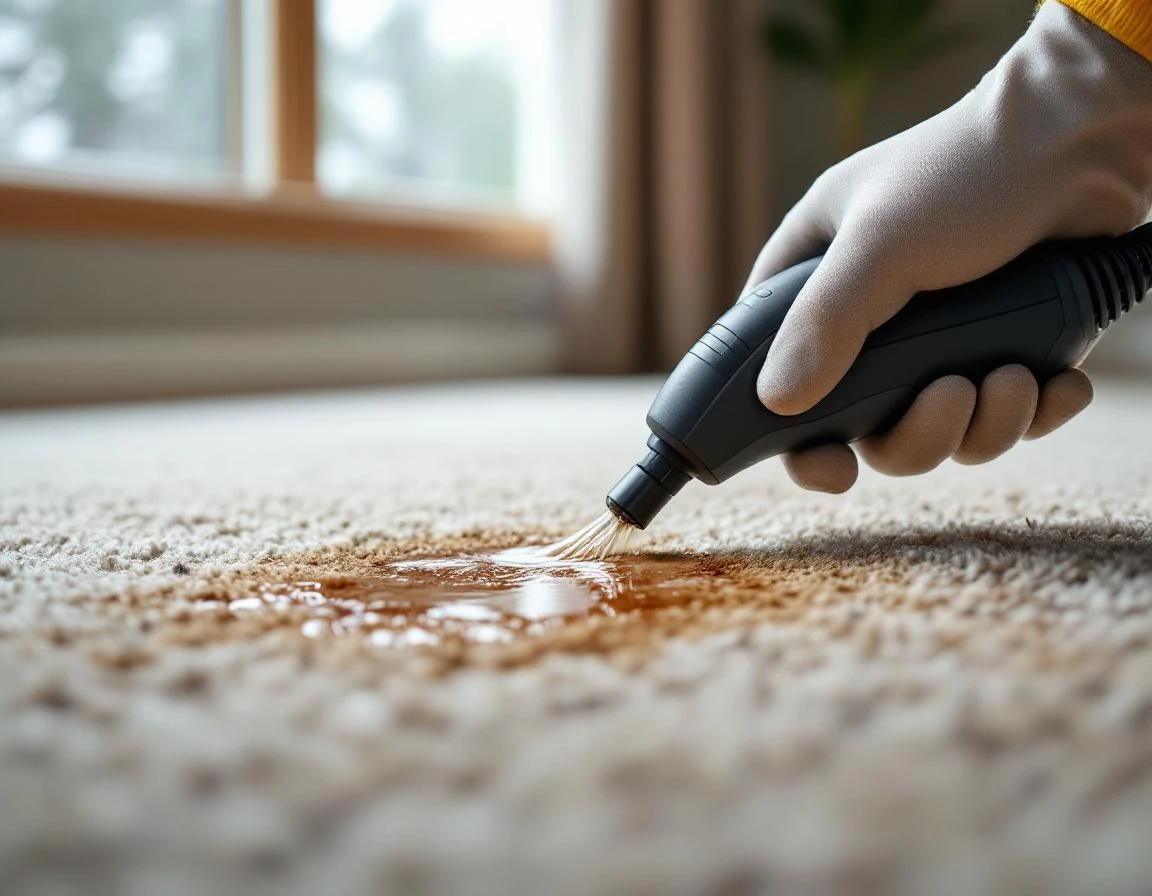
Complete odor removal requires verification beyond what you can smell. Use a black light to scan the treated area in darkness—residual urine glows yellow-green under UV light, revealing any missed spots or saturation that has wicked into padding. Professional carpet cleaners often return for a 72-hour follow-up inspection because some odors only emerge after the carpet dries completely.
If accidents reoccur in the same location within weeks, the issue extends beyond surface fibers. Subfloor contamination or residual bacteria in the padding attracts pets back to the same spot. This pattern signals the need for padding replacement or subfloor sealing, not another round of surface cleaning.
Prevention starts with managing spring stressors that trigger accidents. During April and May, increase bathroom breaks to every four hours and place enzyme-treated pee pads near doors where pets wait to go outside. These absorbent barriers catch accidents before they reach carpet fibers.
Document every professional treatment with dated photos and service receipts. Rental property managers reviewing deposit disputes need evidence that you addressed damage immediately. Insurance claims for pet-related carpet replacement require proof that professional restoration was attempted before replacement became necessary.