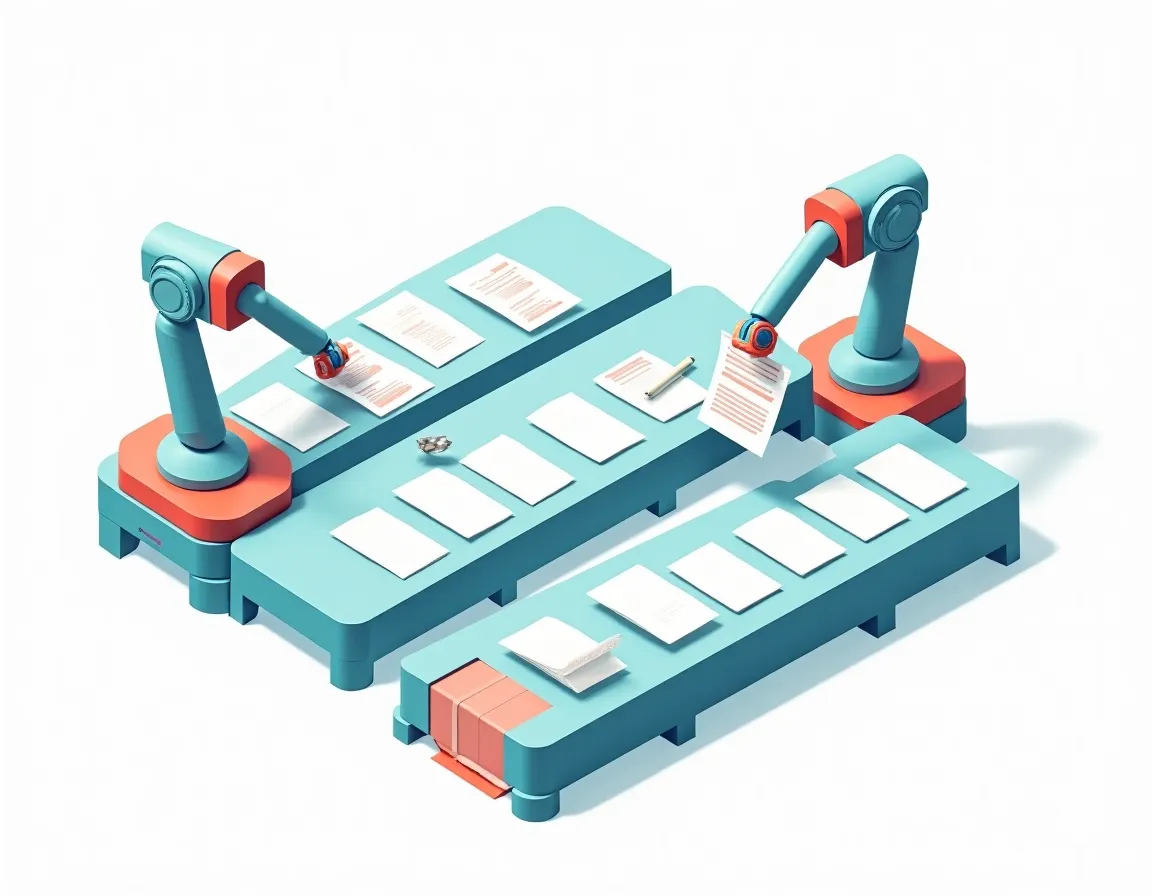
The Real Cost of Manual Publishing Workflows
Publishing teams spend 15+ hours weekly on manual, repetitive tasks that drain resources and stall growth. A typical 2,000-word blog post takes 6-8 hours from initial draft to final publication across multiple platforms. Without automated content pipelines publishing, writers create content in Google Docs, editors review and revise in WordPress, social media managers reformat excerpts for LinkedIn and Twitter, and email specialists rebuild the same content for newsletters.
Handoffs between writers, editors, and publishers create approval delays that stretch timelines from days to weeks. Each transition point introduces risk: missed edits, outdated versions, and communication gaps that require redundant work to resolve.
The financial impact compounds quickly. Consider a content manager earning per hour who spends 15 hours weekly on manual formatting, metadata entry, and platform-specific adjustments. That’s in hidden overhead for a single role. Scale that across a three-person team, and you’re looking at nearly spent on tasks that automation handles in minutes.
Beyond direct labor costs, redundant formatting and channel-specific adjustments multiply inefficiency. Tracking approvals across email threads, maintaining version control in shared folders, and re-keying the same metadata into five different systems creates friction that prevents teams from scaling content output when demand increases.
The 5-7 Publishing Tasks Most Ripe for Automation
Walk through your last blog post from draft to live. Count the steps where someone manually copied, pasted, reformatted, or handed off a file. Those friction points are costing you hours per piece.
- Content format conversion burns 60-90 minutes per article. Your writer drafts in Google Docs, then someone manually adapts it for your blog, email newsletter, LinkedIn post, and website landing page. Each version requires different formatting, length adjustments, and CTA placement. Automation reads the source draft once and generates all four versions simultaneously, matching each platform’s specifications.
- Metadata and SEO tagging takes another 20-30 minutes of research and data entry. Someone manually generates title tags, meta descriptions, and identifies target keyphrases, then inputs them into multiple fields across your CMS. Automated pipelines analyze content semantically and populate all SEO fields based on keyphrase research and search intent mapping.
- Approval routing and version control introduces 2-5 day delays. Drafts move through email chains, Slack threads, or project management tools where stakeholders leave comments in different formats. Automated workflows route content through defined approval gates with structured feedback forms, eliminating the back-and-forth that doubles production time.
- Image optimization consumes 30-45 minutes per post. Your designer resizes hero images for desktop and mobile, compresses files, creates social media preview cards, and writes alt text for accessibility. Automation handles resizing, compression, and generates descriptive alt text from image analysis.
- Cross-platform publishing means logging into 3-5 different systems to manually schedule or post the same content. Automated publishing pushes finalized content to WordPress, Mailchimp, and social channels from a single command. See how PublishPuffin handles these tasks across your entire content pipeline.
Step-by-Step Automation Setup to Reduce Publishing Overhead with Automation
The key to successful automation is starting small and building momentum. Teams that try to automate everything simultaneously often stall in implementation complexity. Instead, a phased approach delivers quick wins that build internal buy-in while you refine your processes.
Audit & Map Your Workflow
Begin by documenting every step in your current publishing process. Map each handoff between team members, every approval gate, and all manual tasks from draft completion to final publication. Track the time spent at each stage for five to ten pieces of content.
Look for bottlenecks where content sits waiting: approval queues that take two days, formatting tasks that require specialized skills, or manual data entry repeated across platforms. These friction points represent your highest-impact automation opportunities. One Portland-based media company discovered that their content spent a substantial portion of total production time waiting in approval limbo rather than being actively worked on.
Select Automation Priorities
Don’t automate everything at once. Choose two to three high-impact tasks where automation delivers immediate, visible results. Focus on repetitive, rules-based activities that don’t require creative judgment: format conversion, image optimization, social media scheduling, or CMS uploads.
Quick wins reduce resistance. When your team sees a task that previously consumed four hours now complete in fifteen minutes, they become advocates rather than obstacles. Start with tasks that frustrate your team most—the boring, repetitive work that pulls them away from creative strategy.
Integration & Testing
Select automation tools that integrate with your existing content stack. If you publish through WordPress, choose solutions with native WordPress APIs. If you manage editorial calendars in Airtable or Notion, prioritize tools that connect to those platforms without requiring data migration.
Set up trigger-based workflows: when content moves to “approved” status, automation begins immediately—converting formats, optimizing images, scheduling publication, and updating analytics dashboards. Before full rollout, test with four to five pieces to catch edge cases: unusual formatting, special characters, or custom metadata that might break automated processes.
A concrete example: Day 1 content approval to publication. Previously: 4 hours of manual formatting, CMS upload, image optimization, and social scheduling. After automation: 15 minutes of quality review while systems handle execution.
Audit & Map Your Current Workflow
Before implementing automation, you need visibility into where time actually disappears. Create a spreadsheet tracking every publishing step for one typical blog post over two weeks. Document each handoff: writer submits draft (1 day), editor reviews (1 day), stakeholder approval (2 days), designer formats (90 minutes), manual posting to three platforms (3 hours), social scheduler adds captions (30 minutes), analytics check the following week (30 minutes).
The goal isn’t judgment—it’s awareness. Most teams discover that approval delays and handoffs consume more time than actual content creation. Calculate total hours per post, then multiply by your monthly publishing volume. This baseline reveals your true automation opportunity.
Select Your First 2-3 Automation Wins
With your audit complete, prioritize tasks using the quick-win framework: high-frequency + low-complexity + high-time-cost. Tasks that repeat weekly, consume 2+ hours total, and require no human judgment make the best first targets.
A Portland marketing team might automate image resizing and blog-to-email format conversion first—saving 8 hours weekly—then add approval routing workflows to eliminate 2 hours of waiting. Focus on mechanical tasks like formatting, file routing, and platform publishing rather than strategic decisions around editorial voice or audience targeting.
Early automation wins build credibility with stakeholders and create momentum for larger pipeline projects. Start small, measure the time savings, then expand systematically.
Measuring ROI: Before, During, and After Automation
Measuring automation ROI starts with establishing your baseline. Track actual hours spent on manual publishing tasks over a four-week period before implementing any changes. Document time for content formatting, approval cycles, platform uploads, and quality checks across your team.
Consider a four-person Portland marketing team spending substantial time weekly on manual publishing tasks. At typical loaded labor costs, that represents significant annual publishing overhead. But the cost extends beyond direct labor: calculate your cost of delay by measuring revenue impact when content takes considerably longer to publish without automation compared to simplified processes with automated solutions.
Post-automation, track these specific metrics: total publishing time per piece, approval cycle duration, content volume output, and team satisfaction scores. Most teams implementing automated publishing workflow efficiency experience significant reductions in publishing time, translating to substantial annual savings from that same four-person team. The secondary benefit compounds quickly: content published at an accelerated pace begins ranking sooner, typically driving meaningful increases in organic traffic within six months.
Create a simple tracking table with four columns: task name, baseline hours per week, post-automation hours, and dollar savings. Update this monthly for the first quarter after implementation. This framework quantifies the significant overhead reduction through three dimensions: direct hours saved from eliminated manual work, faster time-to-publish accelerating SEO impact, and increased output capacity without adding headcount.
Next Steps: Building Your Automation Foundation
You’ve seen the overhead numbers and the framework for reducing them. Now commit to action: this week, audit your current workflow using the documentation method from earlier sections. Identify which manual tasks consume the most time across your publishing cycle.
Within the next 30 days, automate one high-impact task. Start with something mechanical like cross-platform publishing or formatting conversion rather than strategic decisions. You don’t need a massive platform—a basic automation tool with one integration can deliver measurable results. Track the hours saved and calculate your ROI using the baseline metrics you established.
Document your improvements and share the wins with your team. As you gain confidence, identify secondary automation opportunities and expand your pipeline. That substantial overhead reduction becomes achievable when you approach it incrementally with proper planning and measurement.