
Why Marketplace Platforms Fail Pet Owners
When a pet owner searches for “Labrador spring shedding grooming” or “poodle grooming frequency,” they’re not looking for the nearest available appointment. They’re looking for expertise. Pet grooming breed guides answer questions that marketplace algorithms cannot: how their dog’s coat behaves during seasonal transitions, what grooming schedule makes sense for their breed, and whether their current routine is appropriate for April’s warmer weather.
Marketplace platforms like Rover, Wag, and Care.com solve a different problem. Their algorithms prioritize availability windows, pricing tiers, and review counts. A pet owner searching for breed-specific coat care guidance lands on generic profiles listing “all breeds welcome” and calendar widgets showing open time slots. There’s no published content explaining why double-coated breeds need different spring brushing protocols than single-coated breeds, or how humidity changes affect poodle coat maintenance.
This creates an opening for independent groomers who publish breed guides and seasonal grooming tutorials. When someone searches for spring grooming advice, they discover your expertise before they ever visit a booking platform. You’ve already demonstrated that you understand their Labrador’s undercoat blowout or their Golden Retriever’s feathering patterns. That published knowledge builds trust and positions you as the specialist choice, not just another profile in a marketplace directory optimized for transaction speed rather than breed expertise.
Spring Grooming Challenges by Dog Breed Grooming Requirements
A Golden Retriever arriving for an April appointment presents an entirely different grooming challenge than a Poodle scheduled the same day. Double-coated breeds like Labs, German Shepherds, and Golden Retrievers enter a heavy shedding phase during April and May as they blow their winter undercoats. These dogs need 2-3 brushing sessions per week using undercoat rakes and de-shedding tools to manage the massive coat release. Without this frequency, dead undercoat compacts against the skin, trapping moisture and creating hot spots.
Single-coated breeds like Poodles, Doodles, and Shih Tzus face a different spring reality. Their continuously growing hair doesn’t shed seasonally but mats more readily as spring humidity increases and temperature fluctuations stress the coat. These breeds require professional grooming every 4-6 weeks during spring months, with conditioning treatments between appointments to prevent mat formation at friction points.
Spring also triggers breed-specific allergies that demand targeted bathing protocols. Breeds prone to environmental allergies—French Bulldogs, Boxers, and West Highland Terriers—benefit from hypoallergenic shampoos and oatmeal-based conditioners during peak pollen months. A groomer publishing a Golden Retriever spring guide addresses de-shedding techniques and pollen removal, while a Poodle spring guide focuses on mat prevention and humidity-resistant conditioning.
This breed variation explains why a single “spring grooming tips” post fails both groomers and pet owners. A dog owner searching “German Shepherd spring shedding help” wants specific de-shedding strategies, not generic seasonal advice. Each breed-specific guide ranks for different search queries, captures distinct client segments, and demonstrates the specialized knowledge that marketplace platforms cannot provide. When groomers publish weekly breed guides addressing these spring challenges, they appear in searches exactly when frustrated pet owners need expert guidance.
Three Content Templates That Rank Locally
Independent groomers who publish weekly need repeatable structures that rank for different search intents without starting from scratch each time. The following three content templates cover the search behaviors pet owners exhibit when researching grooming services:
- Breed-specific guides for characteristic research
- Procedural tutorials for solving immediate problems
- Scheduling guides for appointment planning
Template One: Breed Guides for Characteristic Searches
Breed guides rank for searches like “Labrador grooming requirements” and “Golden Retriever spring shedding” where pet owners research their specific dog’s needs. These posts follow a predictable structure: breed history and coat development, seasonal coat behavior patterns, professional grooming frequency, and at-home maintenance between appointments. A groomer in April might publish “Spring Grooming for German Shepherds” covering double-coat blowout protocols and weekly brushing schedules during peak shedding season.
Template Two: Coat Care Tutorials for Problem-Solving Searches
Procedural tutorials rank for “how to prevent matting in poodles” and “removing undercoat from Huskies” where owners face specific grooming challenges. These posts address one problem with step-by-step solutions, tool recommendations, and signals that professional intervention is needed. Adding local intent modifiers like “spring humidity and dog matting” captures pet owners in your region experiencing seasonal coat problems. A tutorial on managing humidity-related matting in Doodle coats answers immediate questions while positioning your grooming service as the expert solution.
Template Three: Scheduling Guides for Appointment-Intent Searches
Frequency guides rank for “how often should I groom my poodle” and “Yorkie grooming schedule” where owners are actively planning appointments. These posts provide breed-specific timing recommendations tied to seasonal factors, converting research directly into booking intent. An April post on “Spring Grooming Schedules for Long-Haired Breeds” addresses increased grooming frequency as temperatures rise, capturing pet owners preparing for warmer months and ready to book their first appointment.
Breed Guide Template Structure
Every breed guide should open with a three-sentence introduction that establishes breed origin, temperament overview, and coat type classification. A Golden Retriever guide begins with their Scottish hunting heritage, friendly family temperament, and double-coat structure featuring dense water-resistant outer guard hairs and soft insulating undercoat. This opening captures breed research searches while establishing your expertise on coat characteristics that drive grooming needs.
The spring grooming timeline section addresses breed-specific shedding cycles and maintenance frequency. Golden Retrievers experience peak shedding from mid-March through May as they shed winter undercoat, requiring professional de-shedding treatments every six to eight weeks during this period. Between appointments, owners should brush with an undercoat rake three times weekly to prevent mat formation and distribute natural oils through the coat.
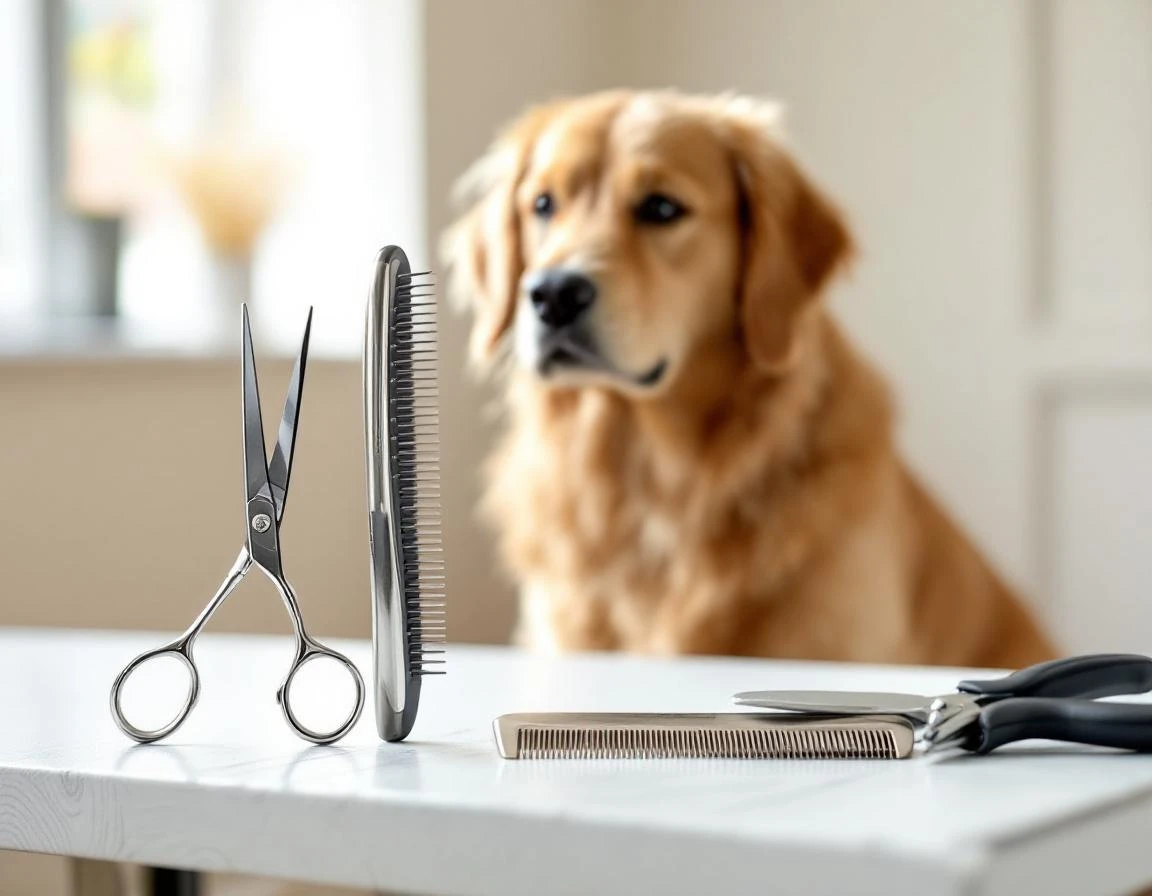
The specific tools needed for at-home maintenance include:
- Slicker brush for topcoat smoothing
- Undercoat rake for de-shedding
- Stainless steel comb for mat detection
- Ear cleaning solution for moisture-prone breeds
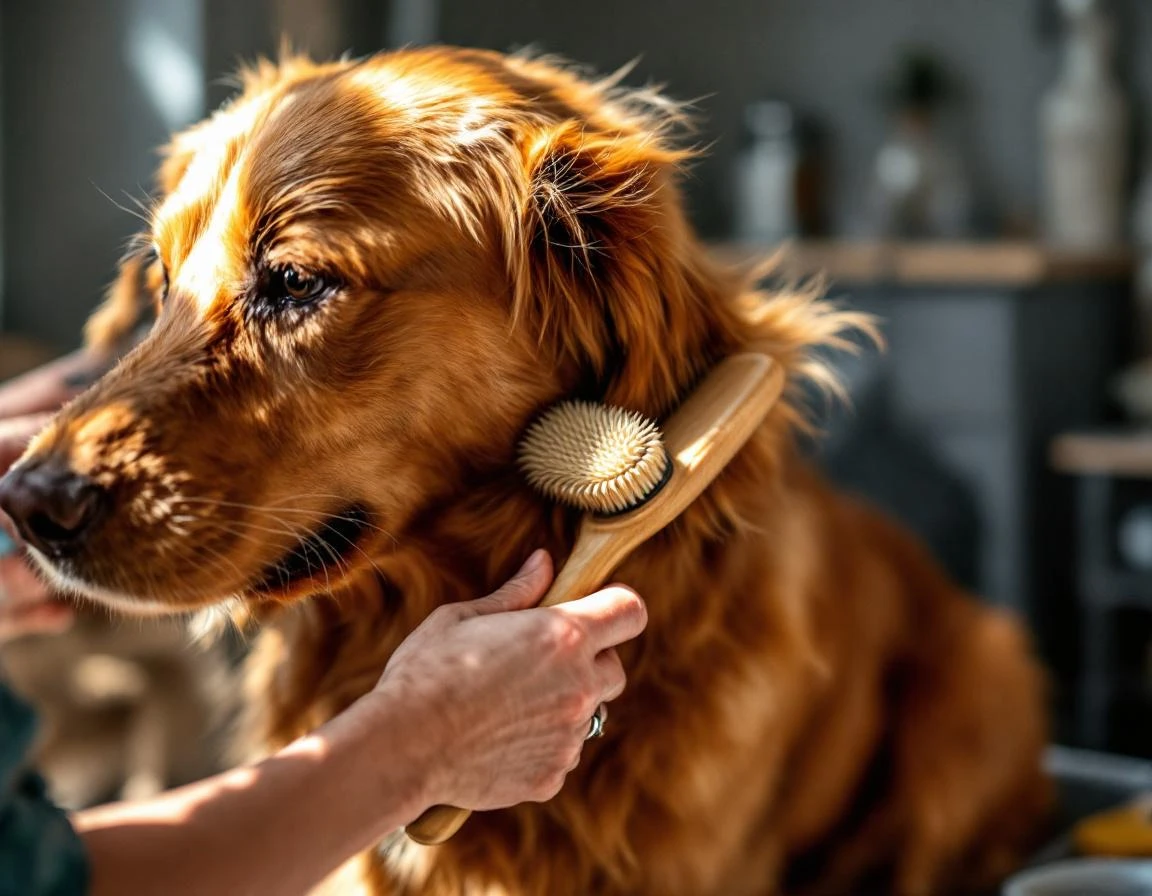
Include a visual reference showing proper brushing technique or the breed’s coat structure in cross-section. Close each guide with a clear call-to-action: “Golden Retriever owners should schedule their first spring grooming appointment in early April, before shedding peaks, to establish a maintenance rhythm that prevents summer skin issues and excessive matting.”
Coat Care Tutorial Template Structure
Coat care tutorials capture high-intent searches from pet owners actively solving spring grooming problems, converting problem-solving queries into appointment bookings. Each tutorial addresses a specific seasonal challenge—matting during humidity spikes, dryness from indoor heating transitions, or accelerated shedding cycles—with targeted solutions that demonstrate professional expertise while establishing the limits of at-home care.
The problem statement opens with immediate seasonal relevance: “Spring humidity accelerates matting in double-coated breeds, particularly during April when temperature fluctuations increase undercoat shedding.” This framework positions the groomer as understanding the precise environmental factors affecting coat health, capturing searches like “how to prevent matting in golden retrievers spring” or “double coat care April.”
Step-by-step instructions follow professional techniques simplified for pet owner understanding: identifying early matting between pad webbing and behind ears, proper line brushing direction following hair growth patterns, and conditioning frequency based on coat porosity. Product recommendations specify shampoos for different coat types—oatmeal-based formulas for sensitive skin, clarifying treatments for heavy shedders, leave-in conditioners for wire-haired breeds.
The professional service CTA explains when at-home solutions fail: “While weekly brushing reduces surface matting, spring shedding requires professional de-shedding treatments that remove undercoat without damaging guard hairs—a technique that prevents skin irritation and reduces shedding duration.” This positions grooming appointments as necessary rather than optional, converting tutorial readers into clients who understand professional value.
Grooming Frequency Guide Template Structure
Frequency guides convert appointment-planning searches by establishing professional standards tied to seasonal transitions. A poodle frequency guide opens with baseline intervals: 4-6 weeks for show-quality coats, 8-12 weeks for pet trims. The spring section tightens these ranges—April requires the 6-week cycle because winter undercoats transition during rising humidity, creating mat-prone conditions that weekly brushing can’t fully manage.
This structure demonstrates expertise while creating scheduling urgency. After establishing frequency ranges, the guide details consequences: skipped spring appointments lead to mat formation near skin, hot spots from trapped moisture, and hygiene problems around eyes and paws. These outcome-focused descriptions position professional grooming as preventive care rather than cosmetic service.
The guide closes with seasonal urgency: “April marks peak grooming season as spring shedding accelerates—schedule your appointment now before availability tightens.” This CTA converts search traffic by acknowledging that groomers fill spring calendars quickly. The template targets how often to groom different dog breeds searches while addressing the specific challenges pet owners face during coat transitions, establishing authority before contact occurs.
Building Local Ranking Advantage with Pet Grooming Breed Guides
Publishing one breed guide per week for twelve consecutive weeks creates a content foundation that outranks marketplace profiles in local search results. When a pet owner searches “Labrador grooming near me” or “best poodle groomer in [city],” they discover your pet grooming breed guides before scrolling to Rover listings. This happens because Google recognizes topical authority: twelve interconnected breed guides, supported by four coat care tutorials and four grooming frequency guides published during April and May, signal expertise that transactional marketplace pages cannot match.
Marketplace platforms optimize for immediate booking availability, not seasonal grooming education. Their pages answer “who’s available today” while your content answers “how should I care for my Golden Retriever’s coat during spring shedding season.” Pet owners researching breed-specific care needs find your expertise first, establishing trust before they consider booking platforms. By the time they’re ready to schedule an appointment, they’ve already identified you as the local authority on their breed’s grooming requirements.
The three-template structure creates content clusters that reinforce each other in search results. A breed guide ranking for “Poodle grooming” links to a coat care tutorial about “managing curly coat matting,” which connects to a frequency guide explaining how often poodles need professional grooming in spring. Each piece ranks for related keywords while directing readers deeper into your expertise, building the trust-based relationship that converts research into appointments.
Consistency matters more than volume. Publishing weekly during your twelve-week campaign, concentrated in April and May when seasonal search volume peaks, captures pet owners at the exact moment they’re researching spring grooming needs. Autonomous publishing tools maintain this cadence without hiring writers. Enabling independent groomers to compete with platform-backed competitors through owned content that establishes expertise before the booking decision occurs.