
Why Belt Progression Transparency Matters for Kids Karate
Choosing a karate studio means committing to years of training, testing fees, and equipment purchases before your child earns a black belt. Understanding exactly what skills they’ll learn and when helps you evaluate whether a program’s timeline reflects genuine skill development or inflated testing cycles that generate revenue. Parents researching kids karate belt progression need to know how different studios structure advancement and what realistic timelines look like.
Parents need clear expectations before signing
June brings peak enrollment season, when studios fill next year’s rosters and parents commit to multi-year contracts. Before you sign, ask for a written progression guide that maps specific skills and timelines to each belt rank. Studios that publish clear progression frameworks demonstrate confidence in their curriculum and give you benchmarks to evaluate your child’s development.
Parents choosing between competing studios consistently favor programs with transparent timelines over those requiring repeated inquiries about advancement criteria. When studios withhold progression details, families question whether testing fees drive promotion decisions rather than genuine skill mastery.
Clear documentation answers the questions that matter: what will my child learn, when will they test, and how long does each rank typically require.
Belt progression systems vary
Not all karate programs follow the same belt structure. Some schools use eight belts from white to black, while others incorporate ten or more ranks with intermediate stripe levels. This variation makes comparing studios challenging—parents need to understand whether a school follows traditional ranking systems or has created accelerated progression tracks designed primarily to increase testing fees.
The standard framework most traditional programs follow includes the following belt colors:
- White
- Yellow
- Orange
- Green
- Blue
- Purple
- Brown
- Black
Testing intervals typically range from three to six months per rank. Skill benchmarks at each belt level give parents concrete checkpoints: yellow belt students should demonstrate basic blocks and punches with proper stance, green belts execute combination techniques with controlled speed, and brown belts perform advanced kata sequences with precision. These measurable milestones help parents assess whether their child is genuinely progressing or simply paying for belt promotions.
Standard Kids Karate Belt System
Most traditional karate schools follow a consistent eight-belt sequence that guides students from beginner to advanced levels: white, yellow, orange, green, blue, purple, brown, and black. This progression framework appears across different karate styles, providing parents with a recognizable structure when comparing programs. Each belt color represents a distinct skill tier, with white symbolizing the beginning student and black representing advanced technical mastery.
Many programs incorporate intermediate belt ranks marked by colored stripes on the current belt. These stripe systems create more frequent achievement milestones, particularly valuable for younger students who benefit from recognition every two to three months rather than waiting six months between full belt promotions. A student might progress from solid yellow belt to yellow belt with one stripe, then two stripes, before advancing to solid orange.
The symbolic meaning behind belt colors varies between schools, but the foundational concept remains constant: progression from fundamental techniques toward complex applications. White belts focus on basic stances and blocks. Yellow and orange belts add offensive techniques. Green through purple belts introduce combinations and controlled sparring. Brown belts refine timing and power. Black belt represents technical knowledge ready for advanced study.
While this color sequence provides the standard framework, specific progression timelines and testing requirements differ between studios. Some schools require demonstrated proficiency in 30 techniques per belt level, while others test 50 or more. One program might mandate four months minimum between tests; another allows advancement every eight weeks.
Understanding your local studio’s documented progression system before enrollment prevents surprises about testing frequency, skill expectations, and advancement costs.
Legitimate programs publish detailed belt requirements that specify exactly what your child will learn at each level.
Realistic Timeline from White to Black Belt
Understanding realistic belt progression timelines helps parents differentiate quality programs from those prioritizing testing revenue. The progression from white to black belt typically spanss three to five years of consistent training. Assuming students attend one to two classes weekly without extended breaks. Studios promising black belts faster than this timeline should raise immediate concerns about curriculum depth and testing standards. For most kids karate class progression timeline purposes, this three to five-year estimate represents the standard in legitimate programs.
Early Progression: White Through Green Belt
The first phase of training moves at the fastest pace. Students progressing from white belt through green belt typically advance every two to four months per belt. Assuming consistent twice-weekly attendance. This rapid early progression reflects the foundational nature of these ranks—students master basic stances, blocks, and strikes that build upon each other relatively quickly. A student starting in June might reasonably reach green belt by the following spring if they maintain regular attendance.
Middle Progression: Blue Through Brown Belt
Progression slows noticeably in the intermediate ranks. Blue, purple, and brown belts typically require four to six months each. With brown belt often extending longer. The curriculum becomes more complex at these levels, incorporating advanced kata sequences, sparring combinations, and teaching responsibilities that demand mastery rather than mere familiarity. Students also face higher testing standards—techniques that passed at lower belts now receive stricter evaluation for precision and power.
Black Belt Candidacy: The Final Year
Most traditional programs require students to spend one year or longer at brown belt before black belt testing eligibility. This extended period allows candidates to refine their entire curriculum, develop teaching skills by assisting with junior classes, and demonstrate the maturity expected of black belt rank. The black belt test itself often spans multiple hours and includes demonstration of all techniques learned throughout the student’s training.
Training frequency directly affects these timelines. Students attending three or more classes weekly may progress at the faster end of these ranges, while once-weekly attendance extends timelines proportionally. Inconsistent attendance—missing weeks during school breaks or sports seasons—adds months or even years to the process. Parents should view progression as a marathon requiring sustained commitment rather than a sprint toward a destination belt.
Skill Benchmarks by Belt Level
Understanding what your child should actually demonstrate at each belt level transforms abstract belt colors into measurable achievements. These benchmarks help parents evaluate whether their child is progressing appropriately or if a studio advances students based on testing fees rather than skill mastery.
White Belt Through Yellow: Foundation Building (0-6 Months)
At white belt. Your child focuses on basic stances—front stance, back stance, and horse stance—along with fundamental blocks, punches, and front kicks. Expect them to learn a simple kata sequence of 10-15 movements that they can perform with prompting from the instructor. Yellow belt students should demonstrate improved coordination by combining blocks with punches in fluid motion, execute roundhouse kicks with proper chamber position, and complete their assigned kata without needing reminders for the sequence.
Orange Through Green: Skill Integration (6-18 Months)
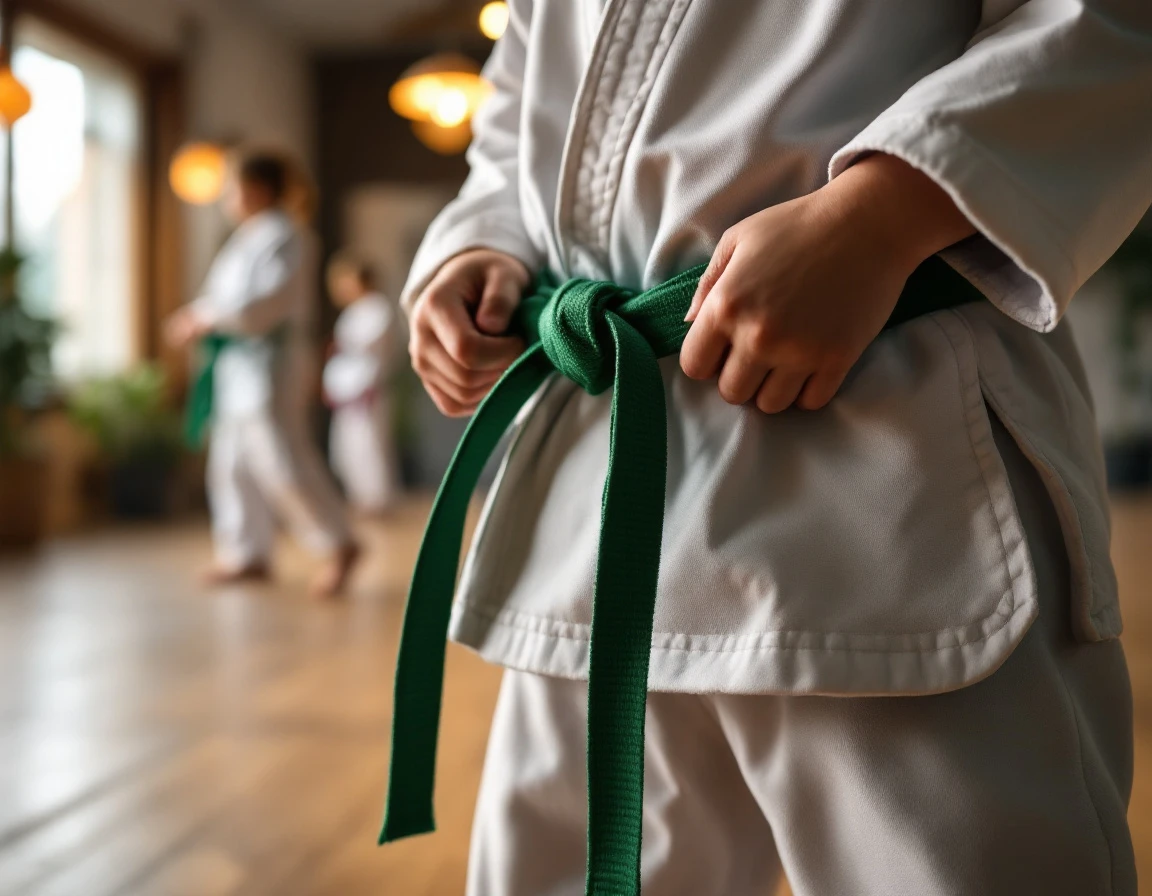
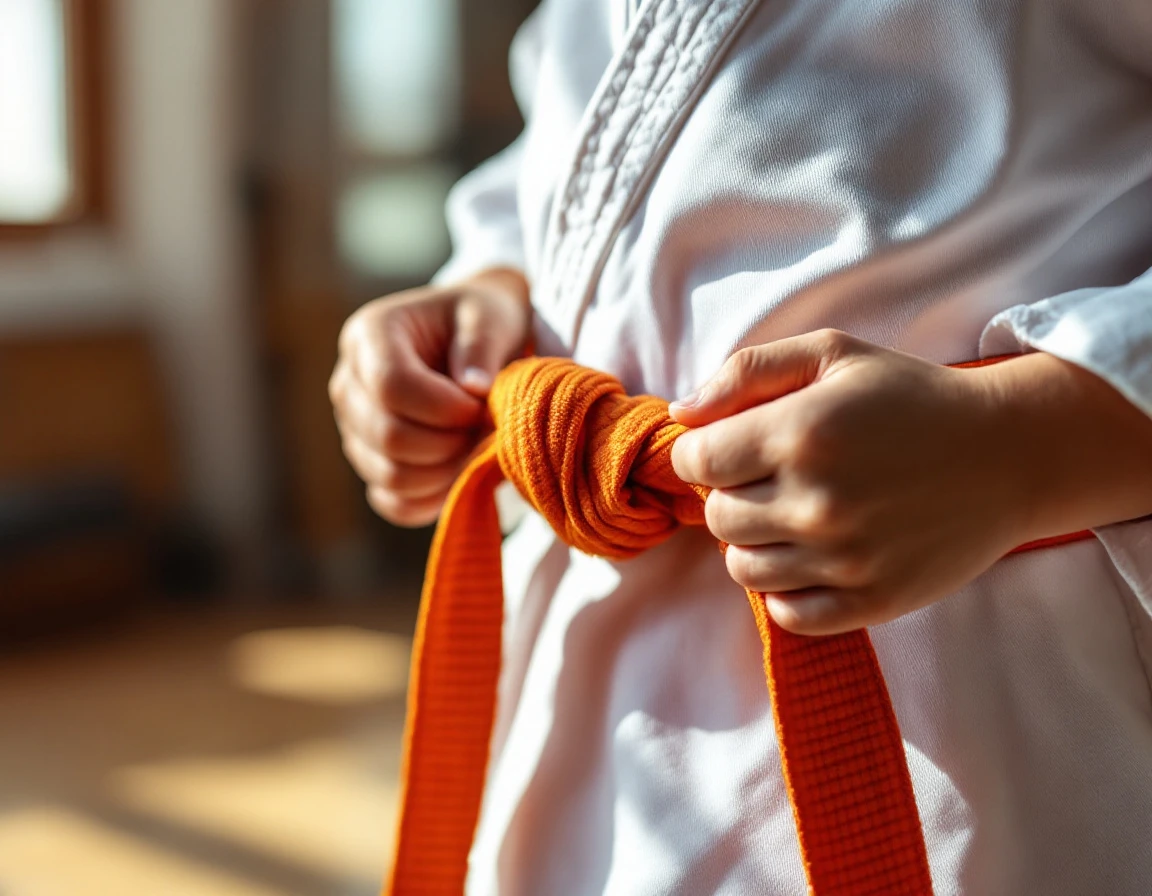
Students at orange belt begin applying techniques in controlled sparring situations, learning distancing and timing while maintaining basic combinations. Green belt represents a major milestone: your child should execute more complex kata with 30-40 movements, demonstrate self-defense applications by explaining how techniques translate to real situations, and show mental discipline improvements like maintaining focus during entire 45-minute classes without behavioral corrections. Many studios introduce peer teaching at this level—green belts should help white and yellow belts learn basic stances during warm-ups.
Blue Through Brown: Advanced Development (18 Months-3 Years)
Blue belt students master advanced kicks including spinning techniques, demonstrate proficiency in point-sparring by scoring controlled techniques during practice matches, and lead warm-up exercises independently for younger students. Brown belt candidates prepare for black belt testing by perfecting all required kata, teaching full techniques to lower ranks, and demonstrating consistent respect and perseverance both in class and during challenging testing situations. Parents should observe brown belts correcting their own form without instructor intervention and helping newer students troubleshoot techniques.
These observable benchmarks give parents concrete criteria for evaluating progress. If your child advances to green belt but cannot complete a kata independently, or reaches blue belt without ever leading warm-ups, the studio may prioritize advancement speed over genuine skill development.
Evaluating Your Studio’s Progression Standards
Armed with knowledge of typical timelines and skill benchmarks, parents can now assess which studios deserve their trust and enrollment dollars. The difference between high-quality children’s martial arts programs and revenue-focused operations becomes clear when you know what questions to ask and which documentation reveals a studio’s true priorities.
Red flags appear when studios accelerate advancement without skill development:
- Programs promising black belt certification in under two years prioritize testing fees over mastery
- Studios that refuse to publish belt requirements or provide only vague skill expectations make it impossible to verify progress
- Programs that push students through testing cycles without demonstrating prerequisite skills treat belts as products rather than earned achievements
Green lights signal studios committed to legitimate progression:
- Quality programs provide written progression guides detailing exactly what students must demonstrate before testing
- Clear testing criteria specify which techniques, forms, sparring skills, and behavioral expectations correspond to each belt level
- Instructors require observable skill demonstrations before advancement—students who cannot execute proper stances, blocks, and strikes at testing speed do not pass regardless of attendance duration
Ask direct questions during studio tours: “What percentage of students who test for each belt actually pass?” and “How many students who start your program reach black belt?” Studios with rigorous standards answer candidly—typically 85-95% pass rates at lower belts and 10-20% black belt attainment rates. Request copies of testing requirements and skill benchmarks for the first three belt levels. Examine published schedules and instructor profiles on studio websites—regular content updates indicate operational transparency and parent communication priorities that extend beyond enrollment season.